A Ghoulish Folly at End Acres: The Talacre Hall Grotto
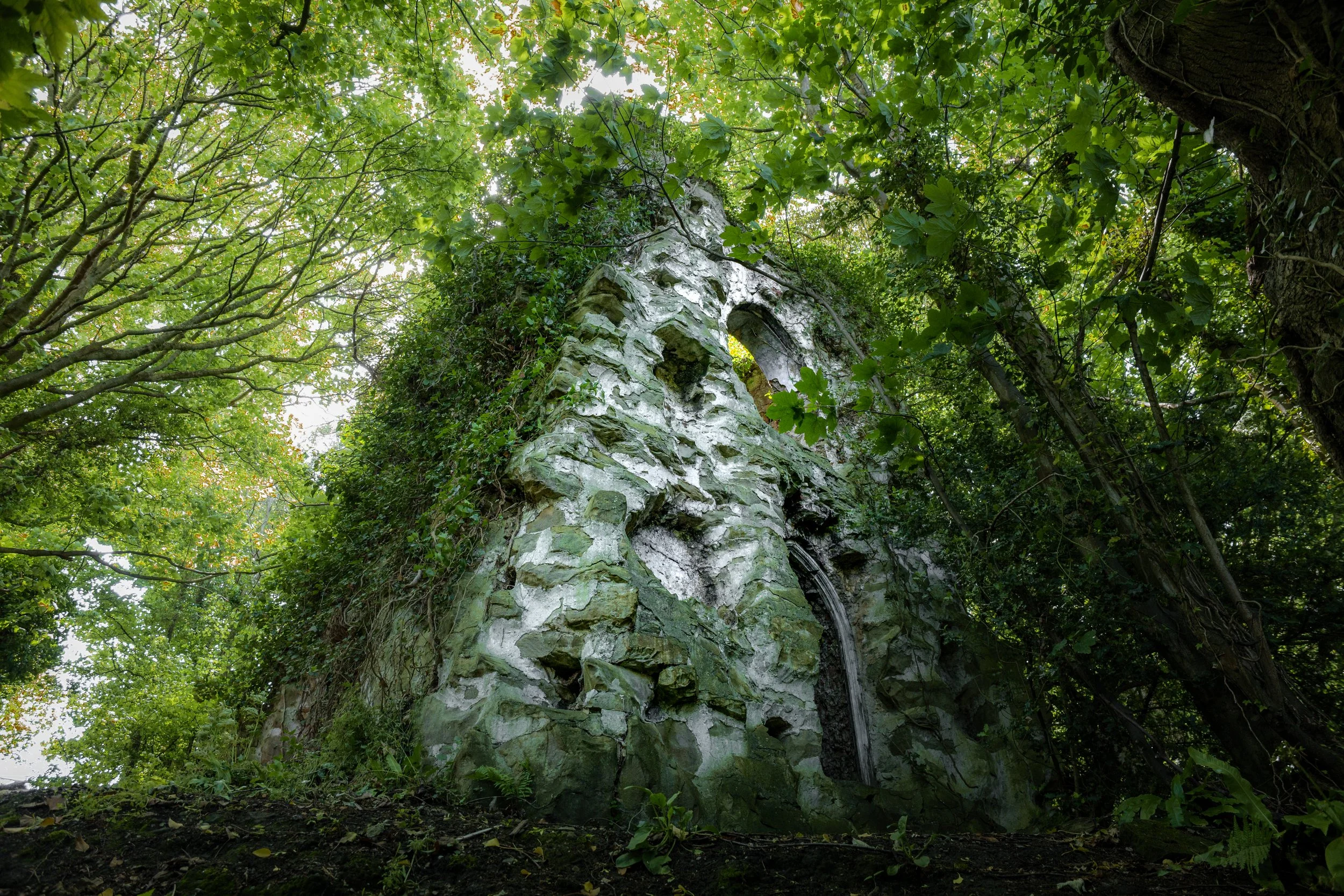
Talacre Hall Grotto, Talacre, Flintshire, Wales.
Like most social media platforms I loathe Facebook – I find the UI inscrutable and haven’t had a presence there since my account was hacked in 2009 – but my girlfriend’s on there and, as a recovering goth, its algorithm often serves her macabre sites of photographic interest. One of these was the Talacre Hall Grotto, a Victorian folly like no other in the overgrown pleasure grounds of a stately home in Flintshire in North Wales, so on a recent trip to Anglesey we made a short detour to get the lowdown.
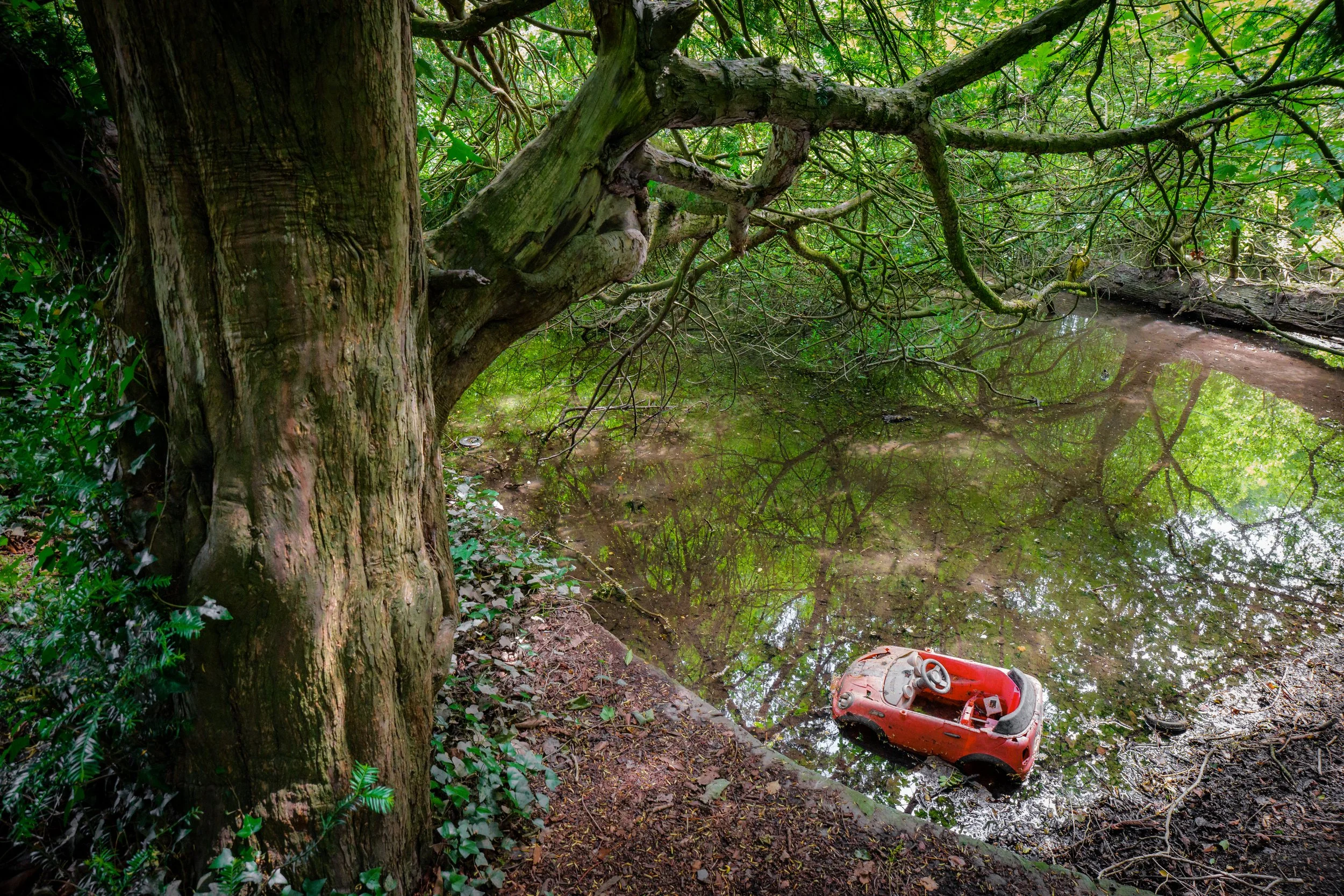
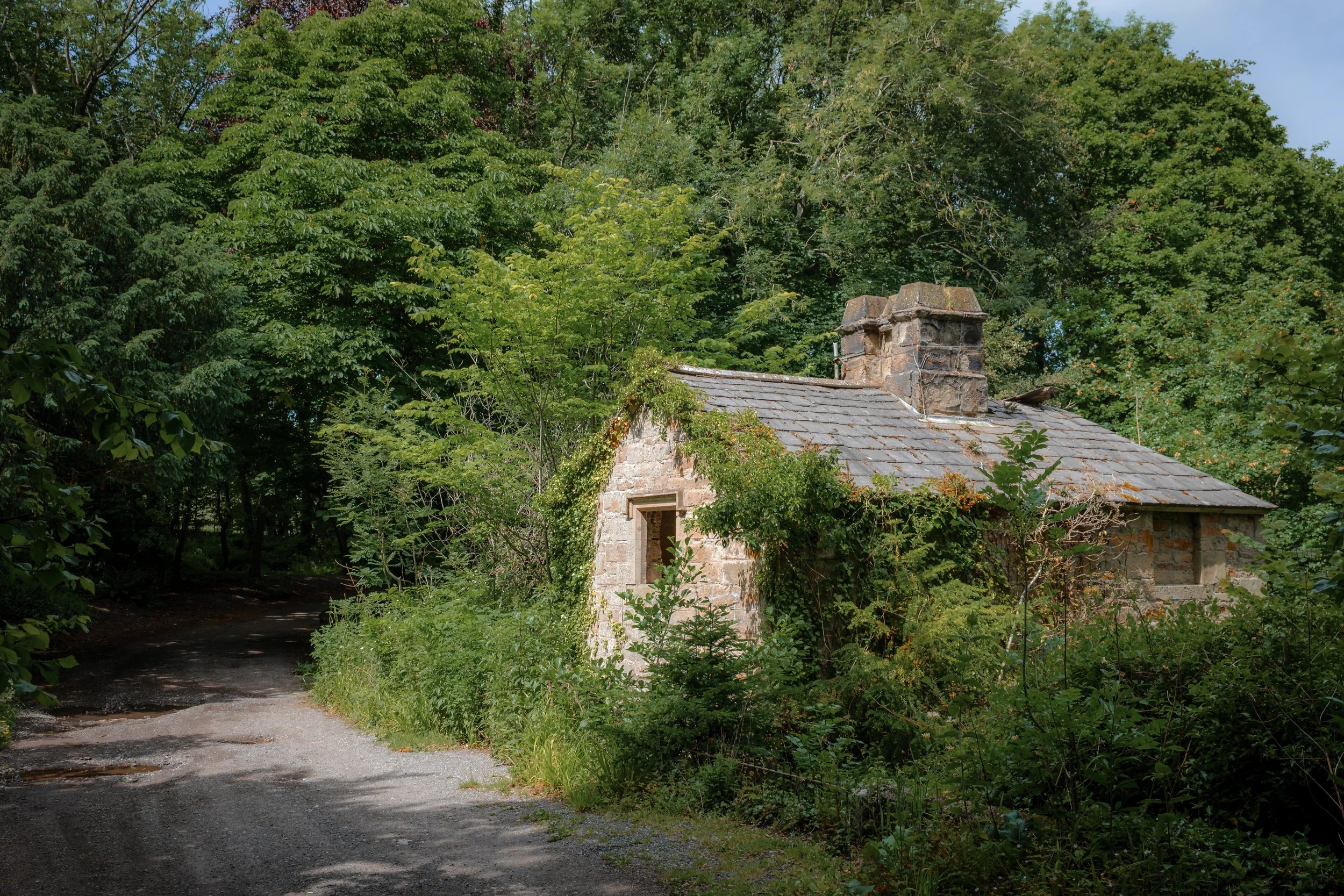
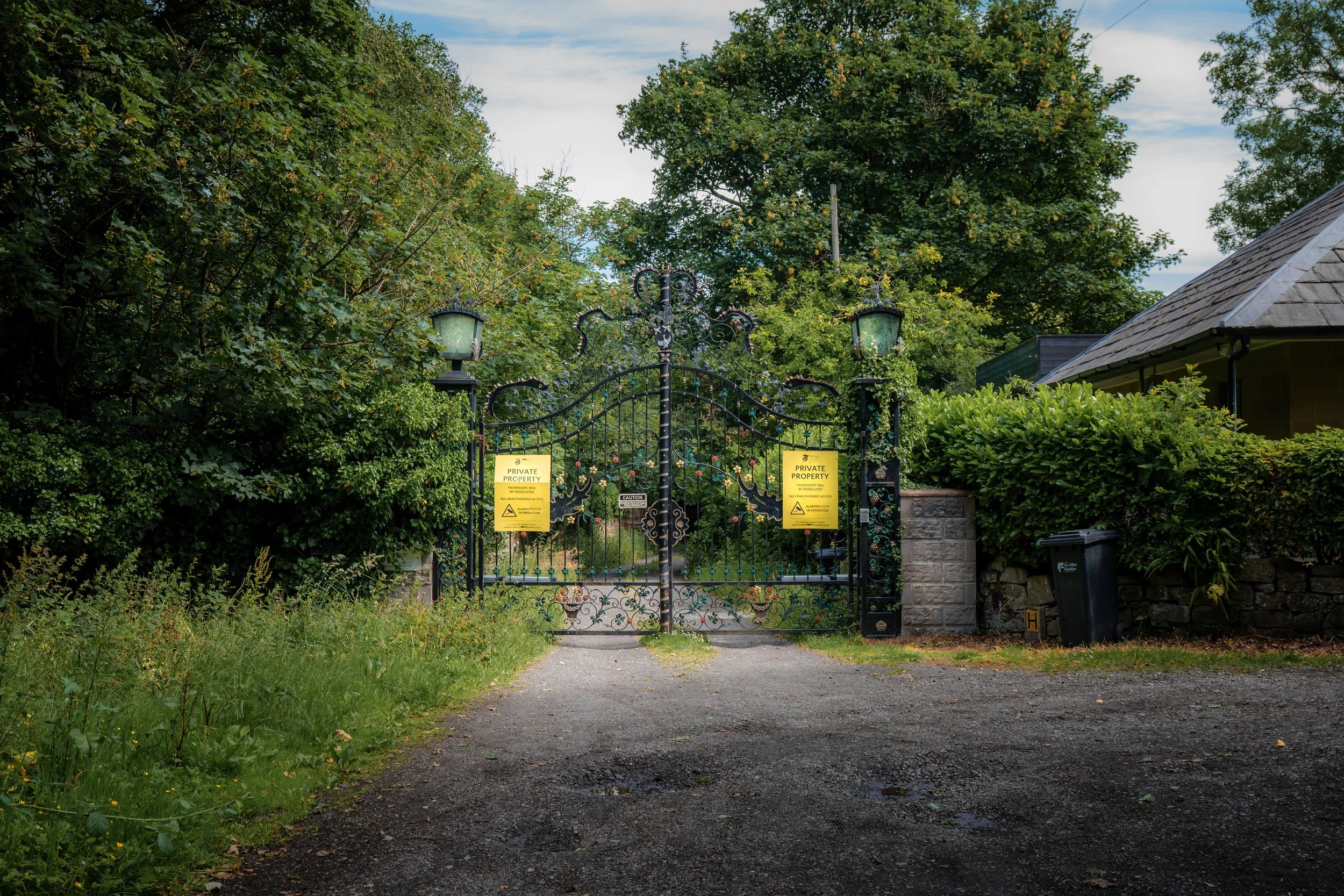
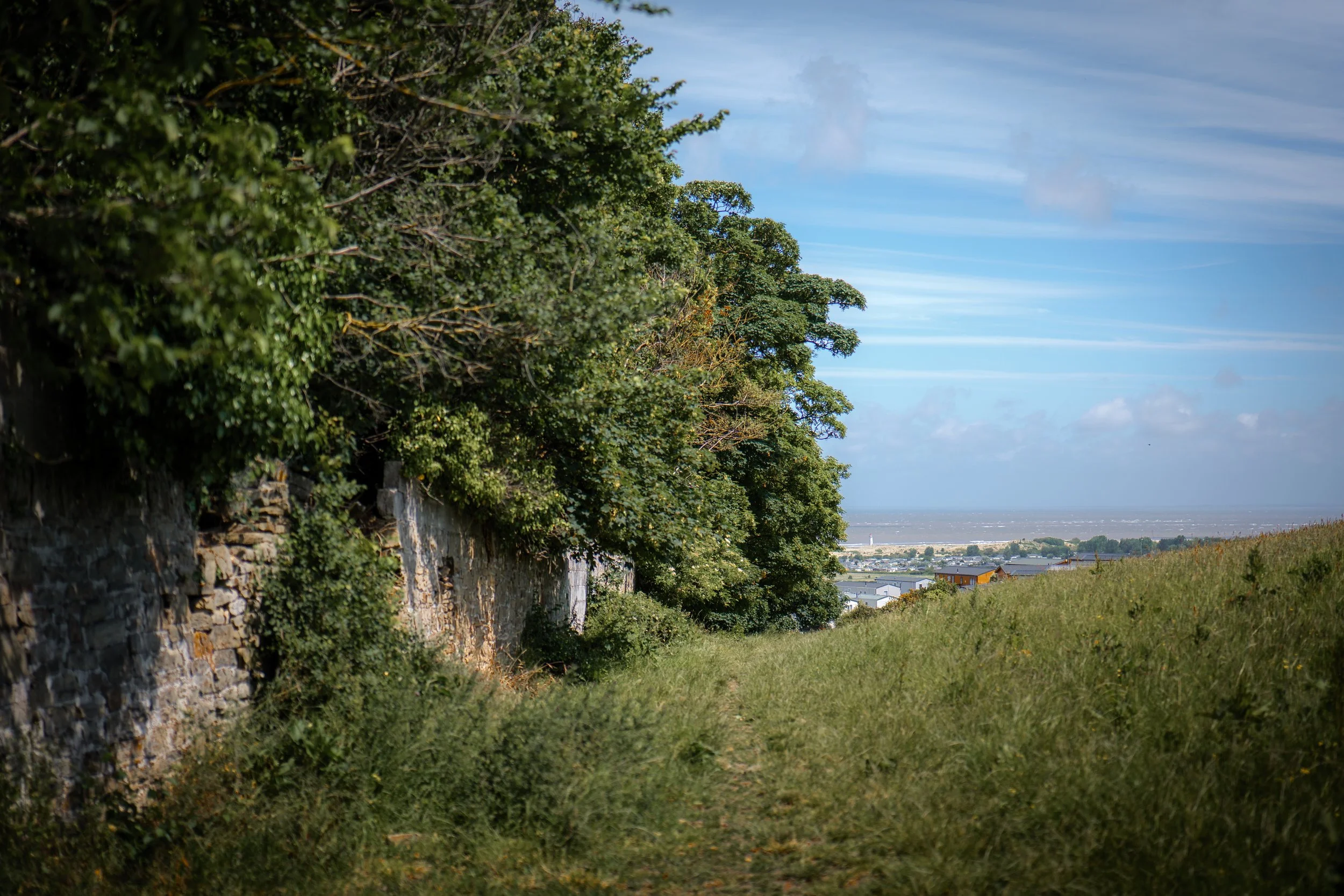
We parked up in Talacre, a tiny coastal village and Wales’s northernmost mainland settlement (its name translates to ‘end acres’), and entered the woodland that houses the grotto, where a condemned pedal car in a pond, a warm-up ruin, and the imposing locked gates of the hall itself set the tone nicely. I was concerned it would be difficult to locate and access – it’s on private land and I’d read that locals take a very dim view of urban (rural?) explorers – but it’s actually as straightforward as it gets; precise directions are readily available elsewhere online so I won’t reproduce them here.
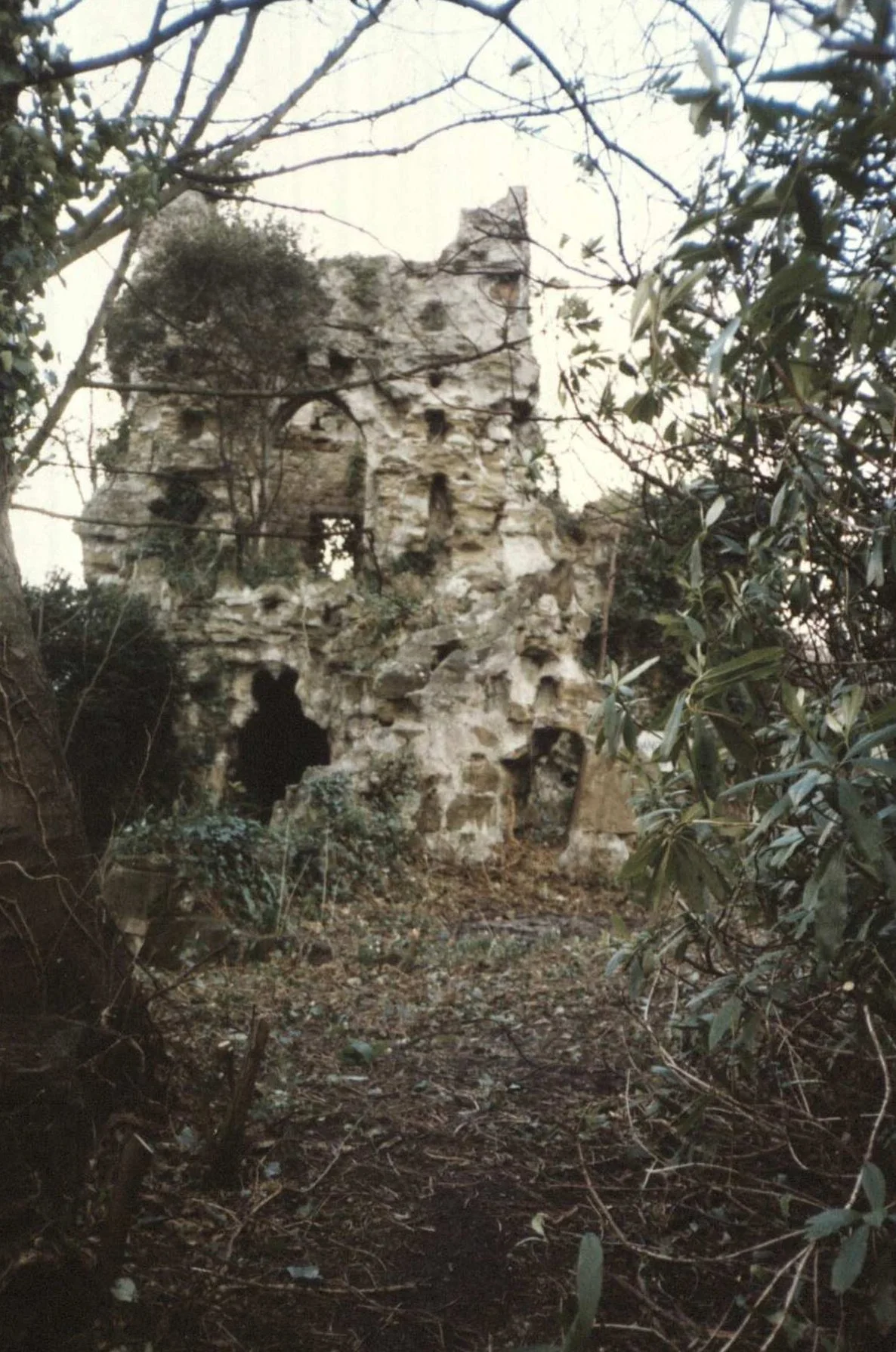
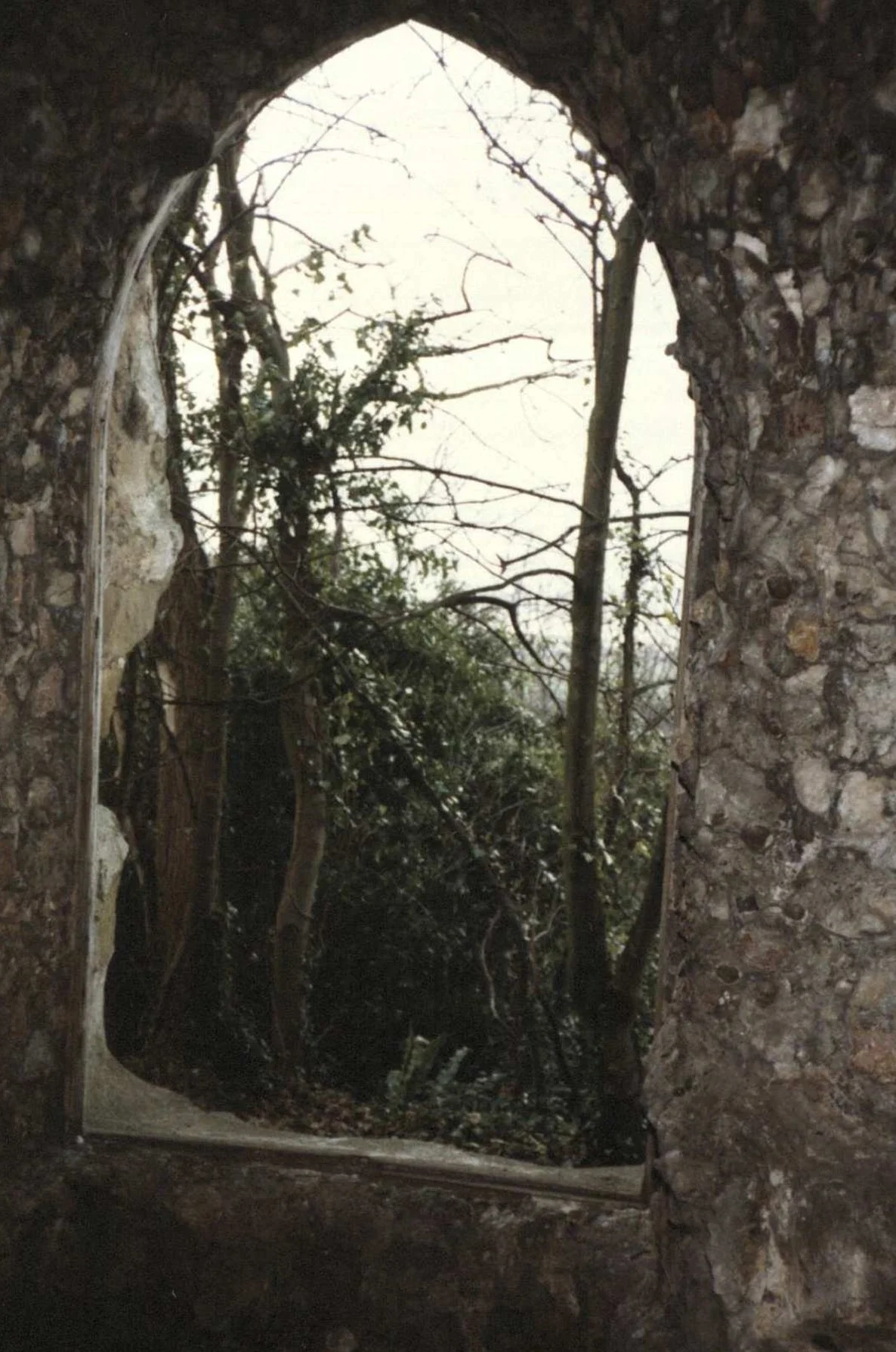
Constructed at some point in the nineteenth century by the evidently eccentric Mostyn family who occupied the main hall, the grotto’s a hulking cuboid set in a clearing, now cocooned by ivy. It’s very much a tale of two halves. The two storey folly tower, accessed through various rickety doorways, windows, and staircases, is a charismatic but fairly conventional solar, equipped with fireplaces and alcoves and lavishly encrusted with seashells, glass, and quartz, all now in an advanced state of decay.
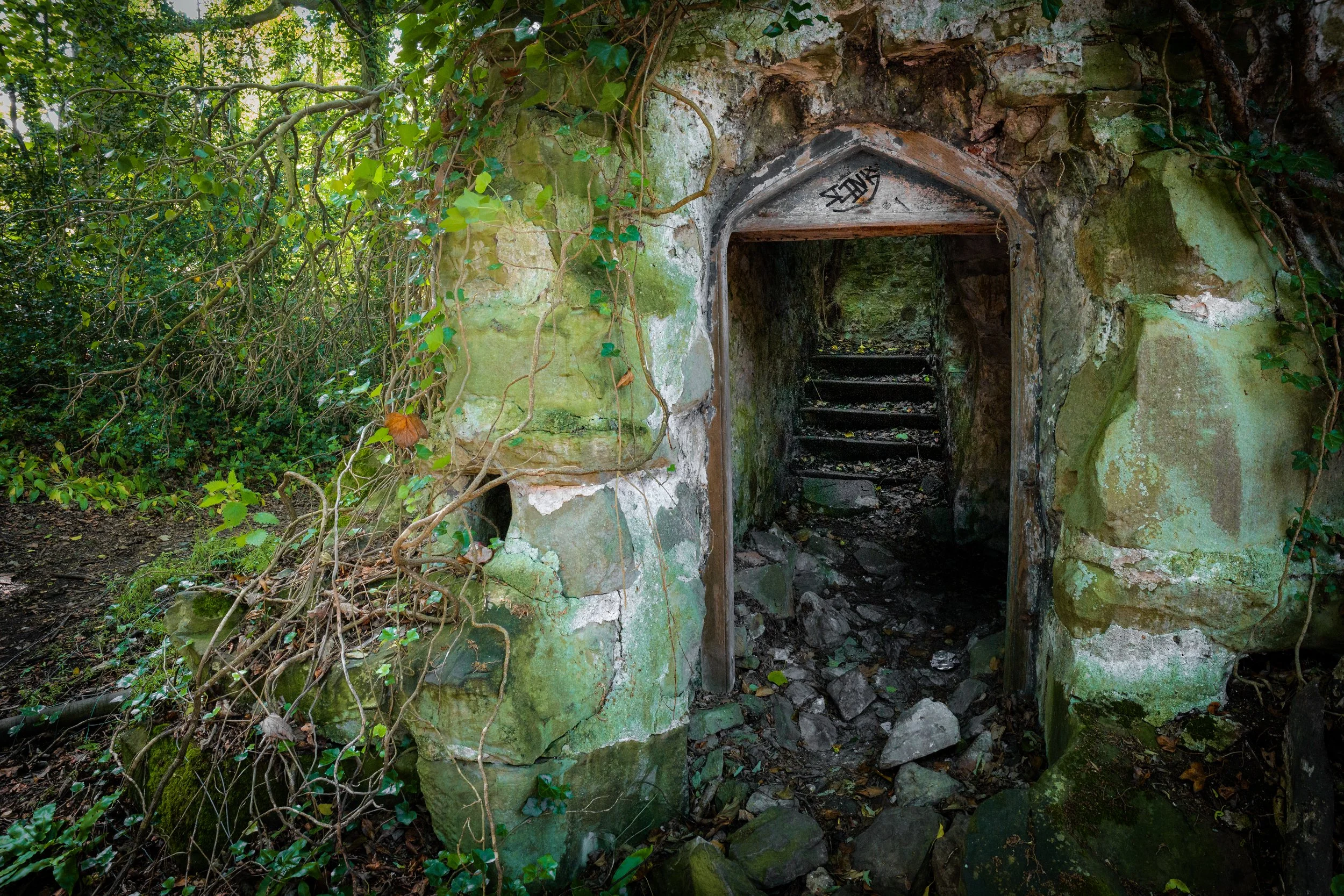
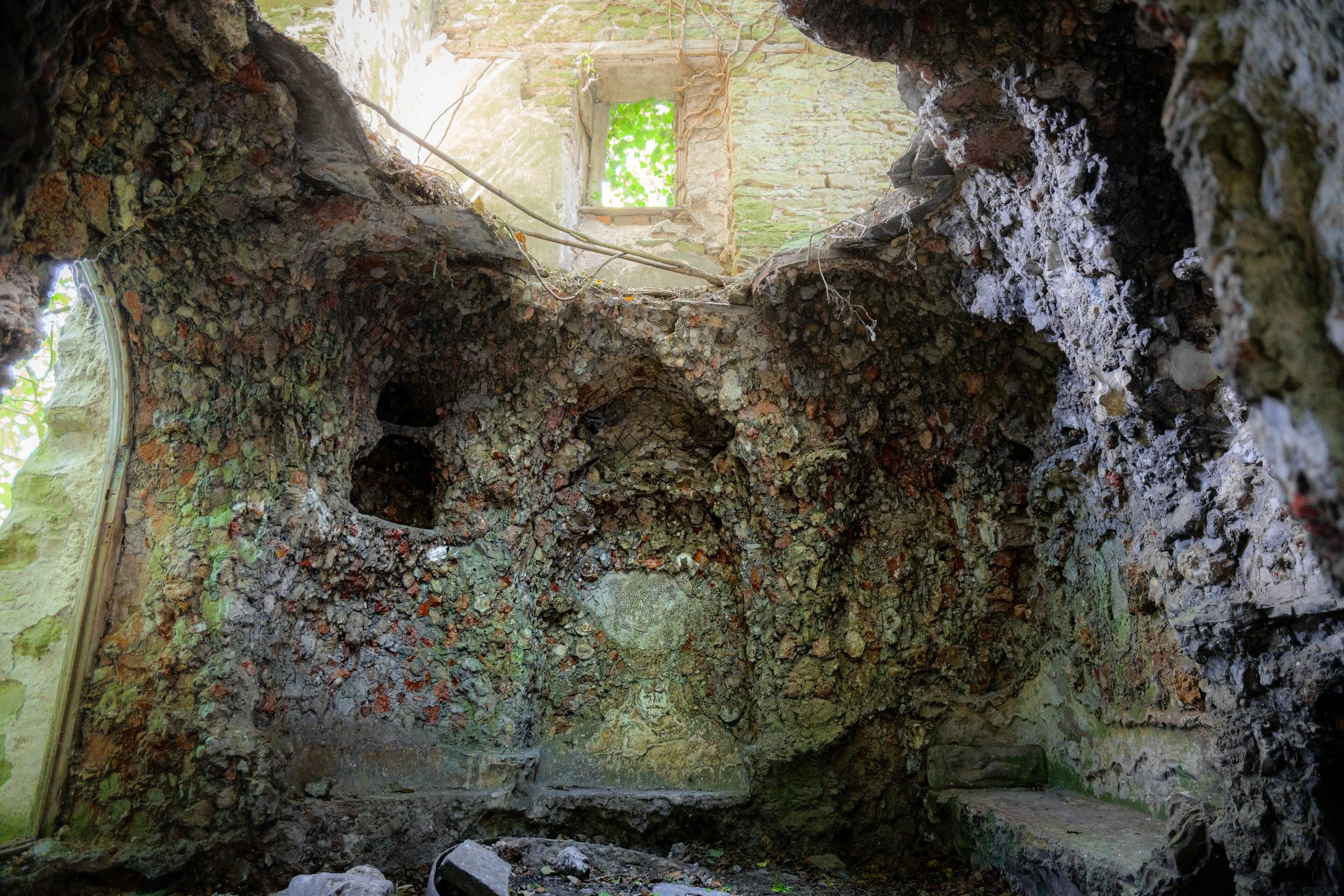
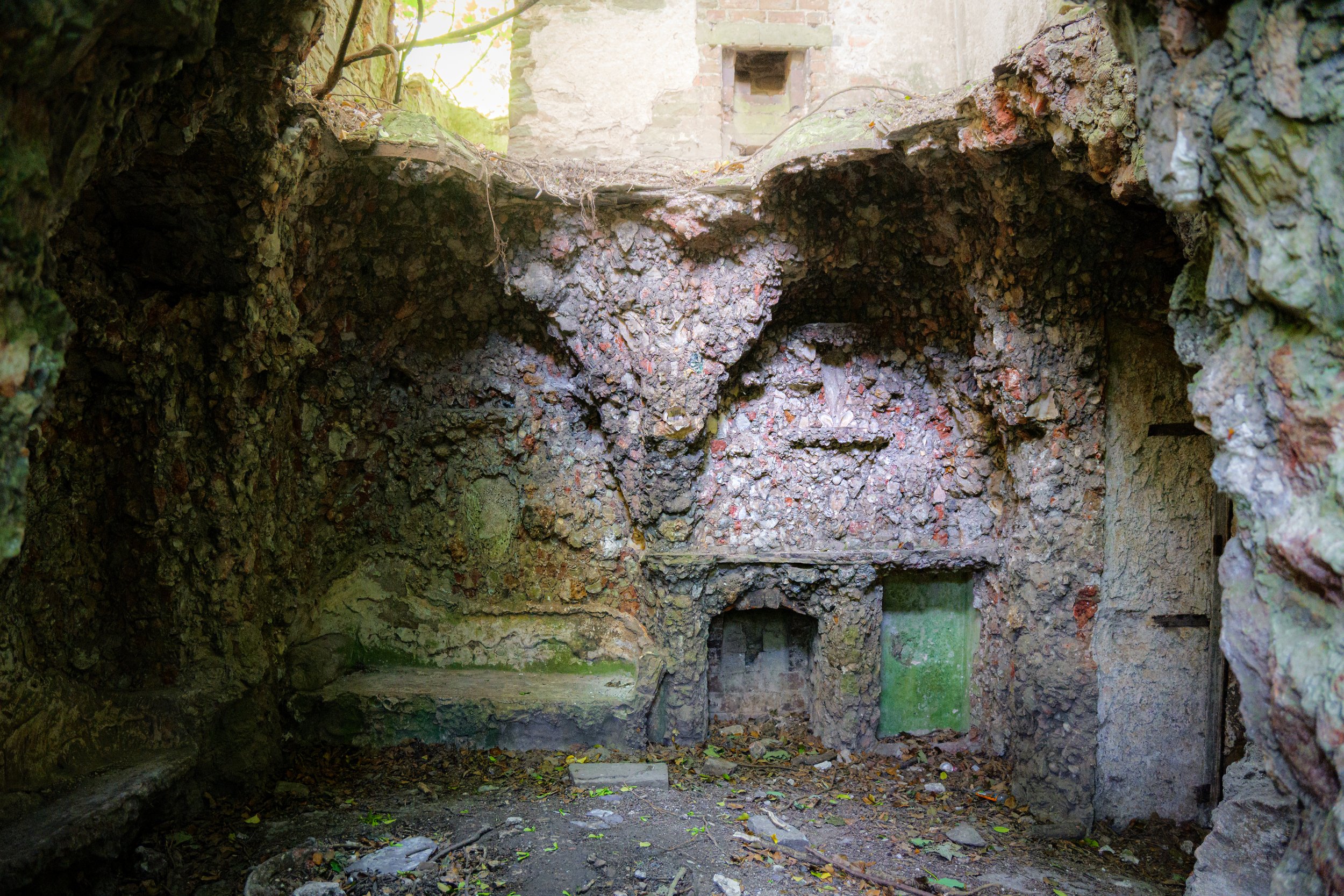
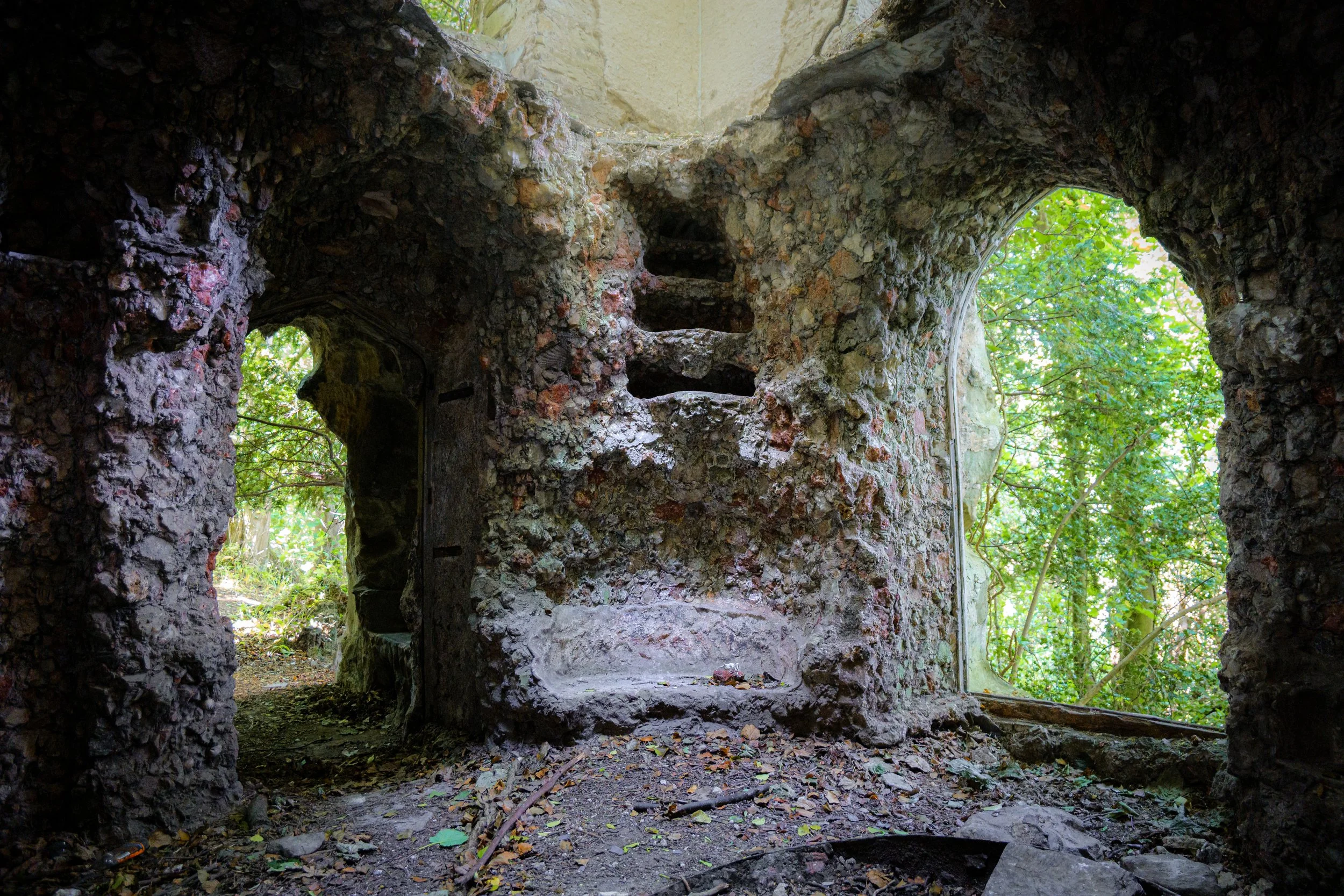
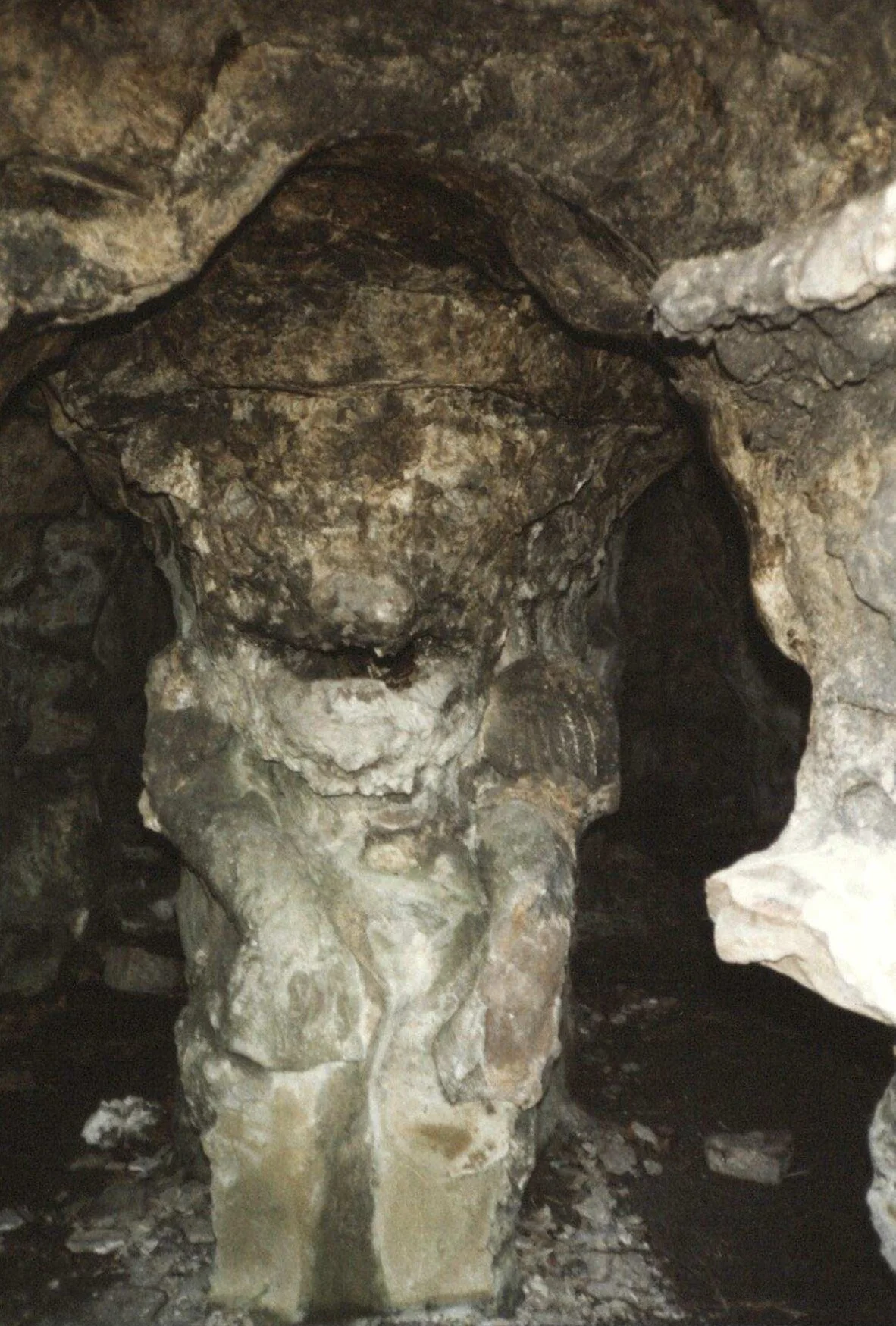
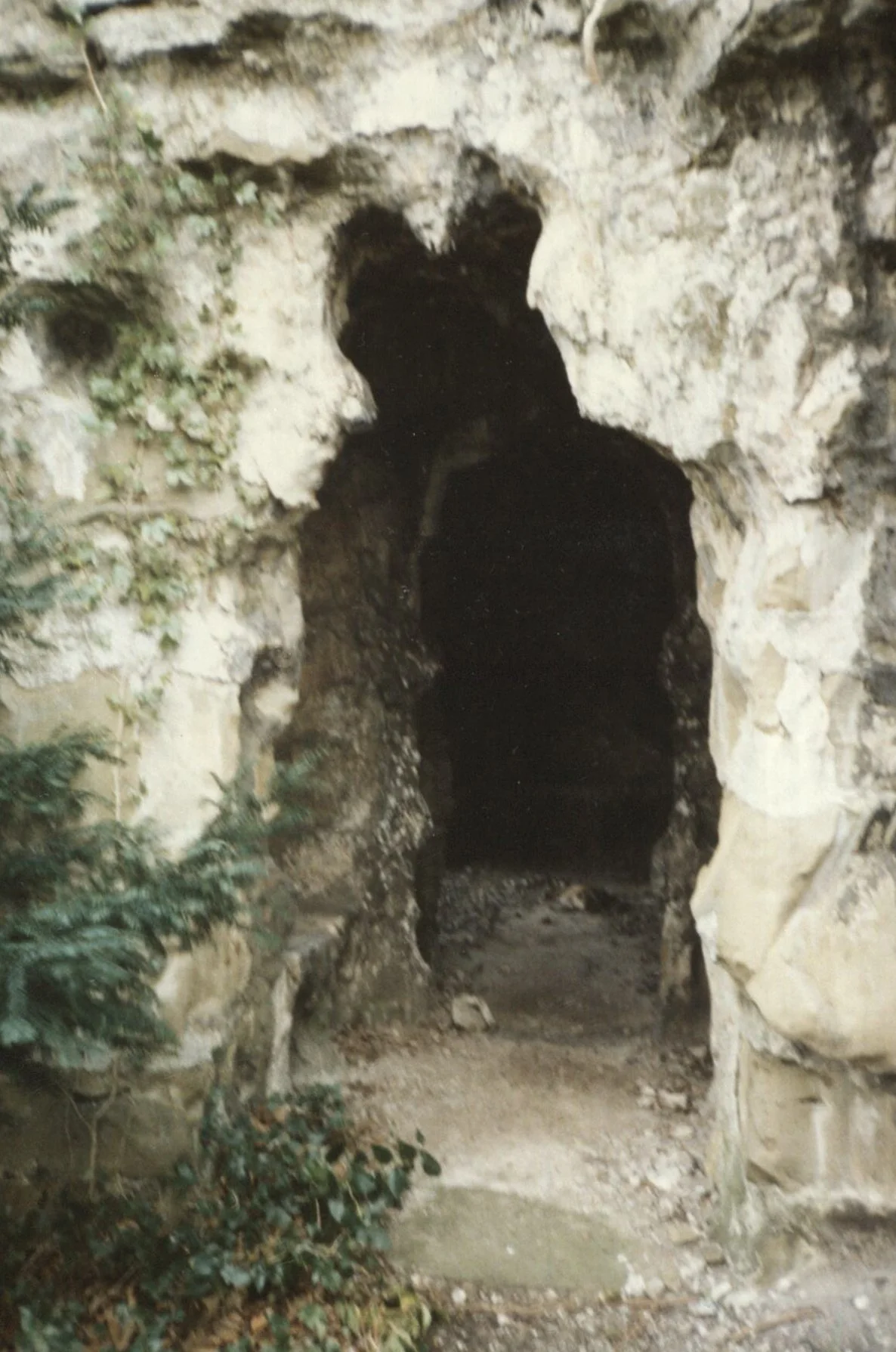
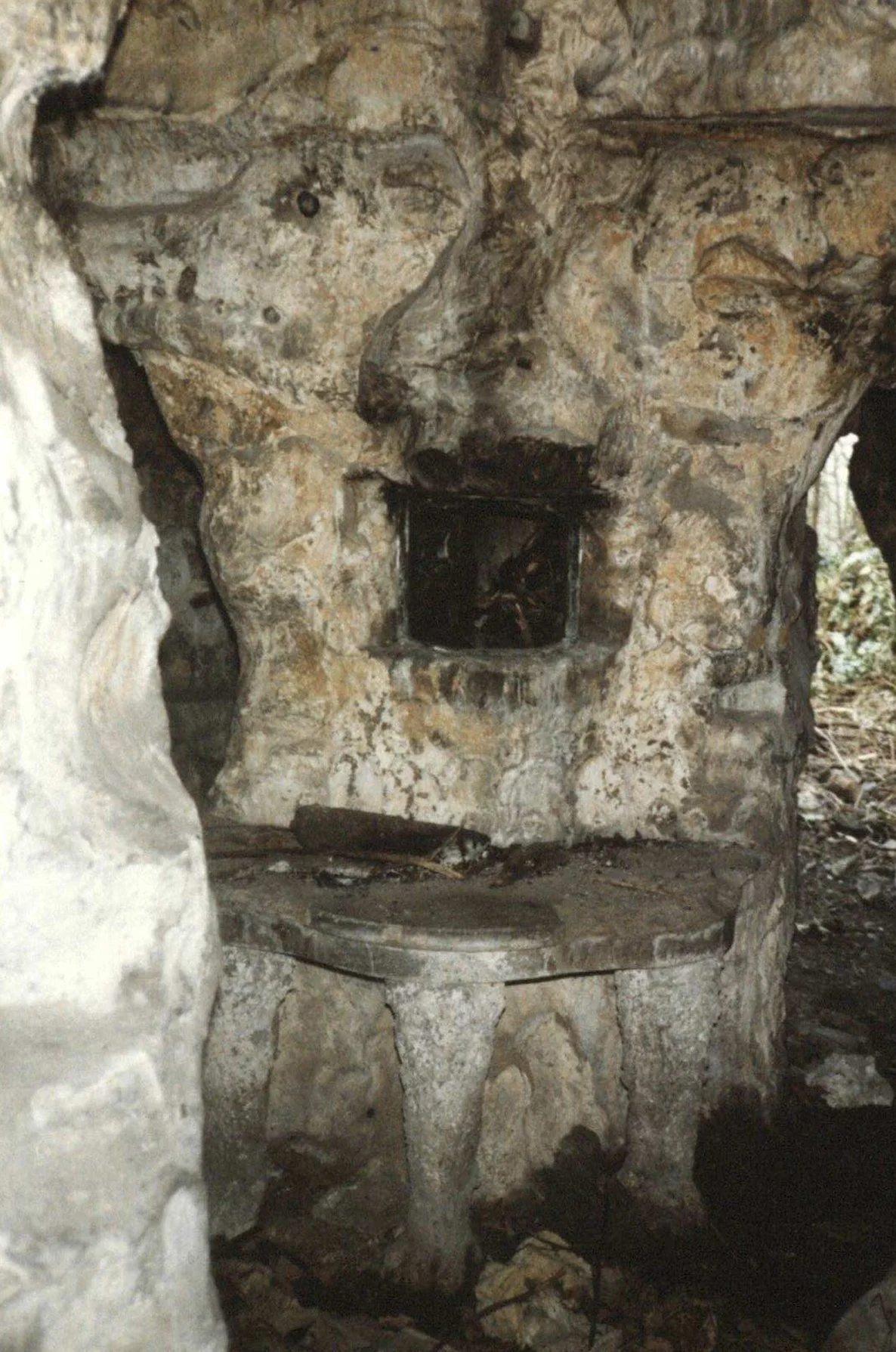
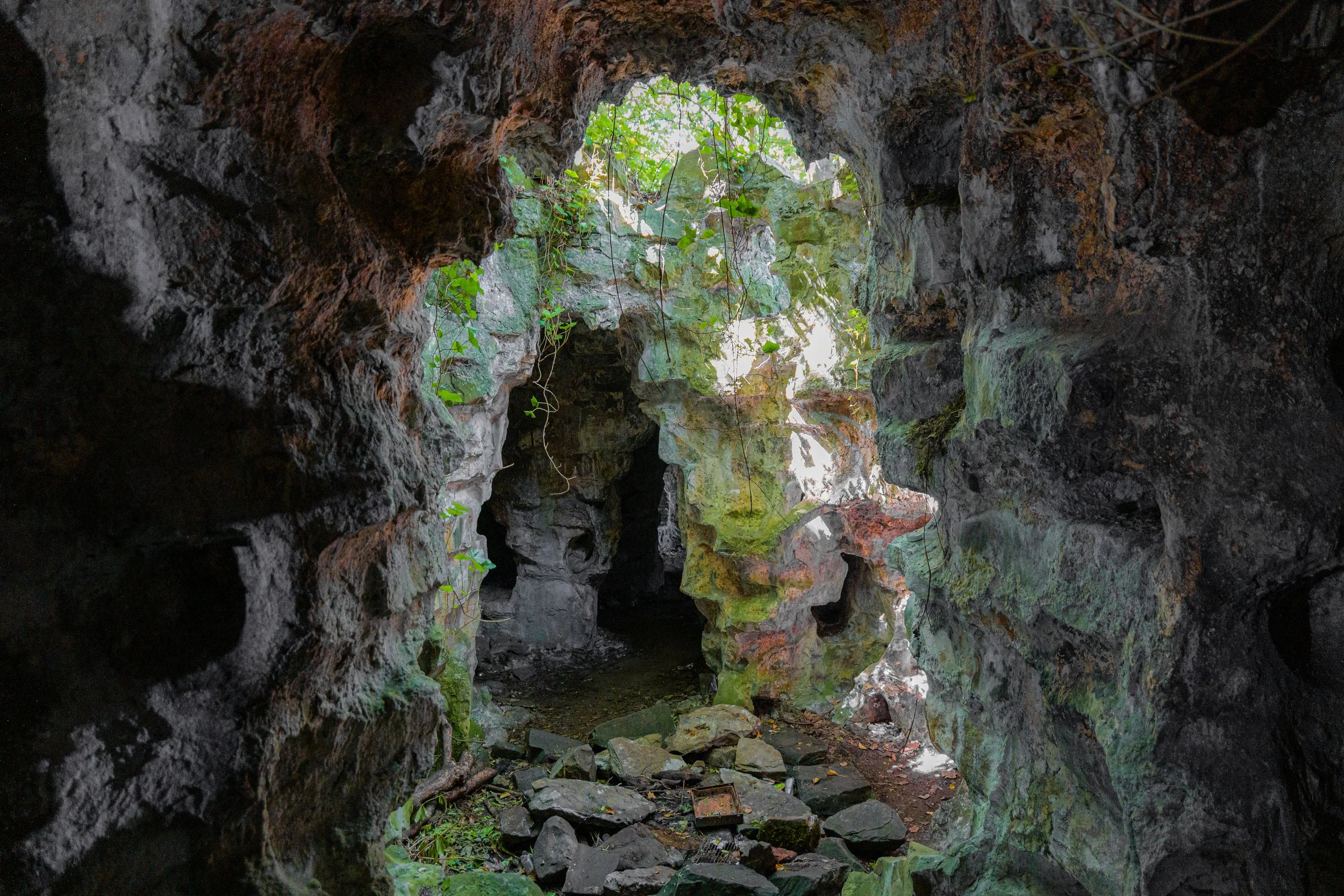
However, the real riches are below, in a subterranean complex of dank chambers excavated into the limestone beneath the tower. These are also done out with furnaces and seating but, in a delightfully eerie touch, also contain an eldritch cast of carved supernatural and folkloric figures peering out of the gloom; they include a griffin, a satyr, a boar’s head, a cyclops, a headless monk or hermit, a life-sized grim reaper, and a grimacing lion fashioned as a table. It really does feel as if you’ve descended into a labyrinthine underworld, and judging from the number of spent candles in its various niches and recesses it’s still a locus of occult pilgrimage and activity.
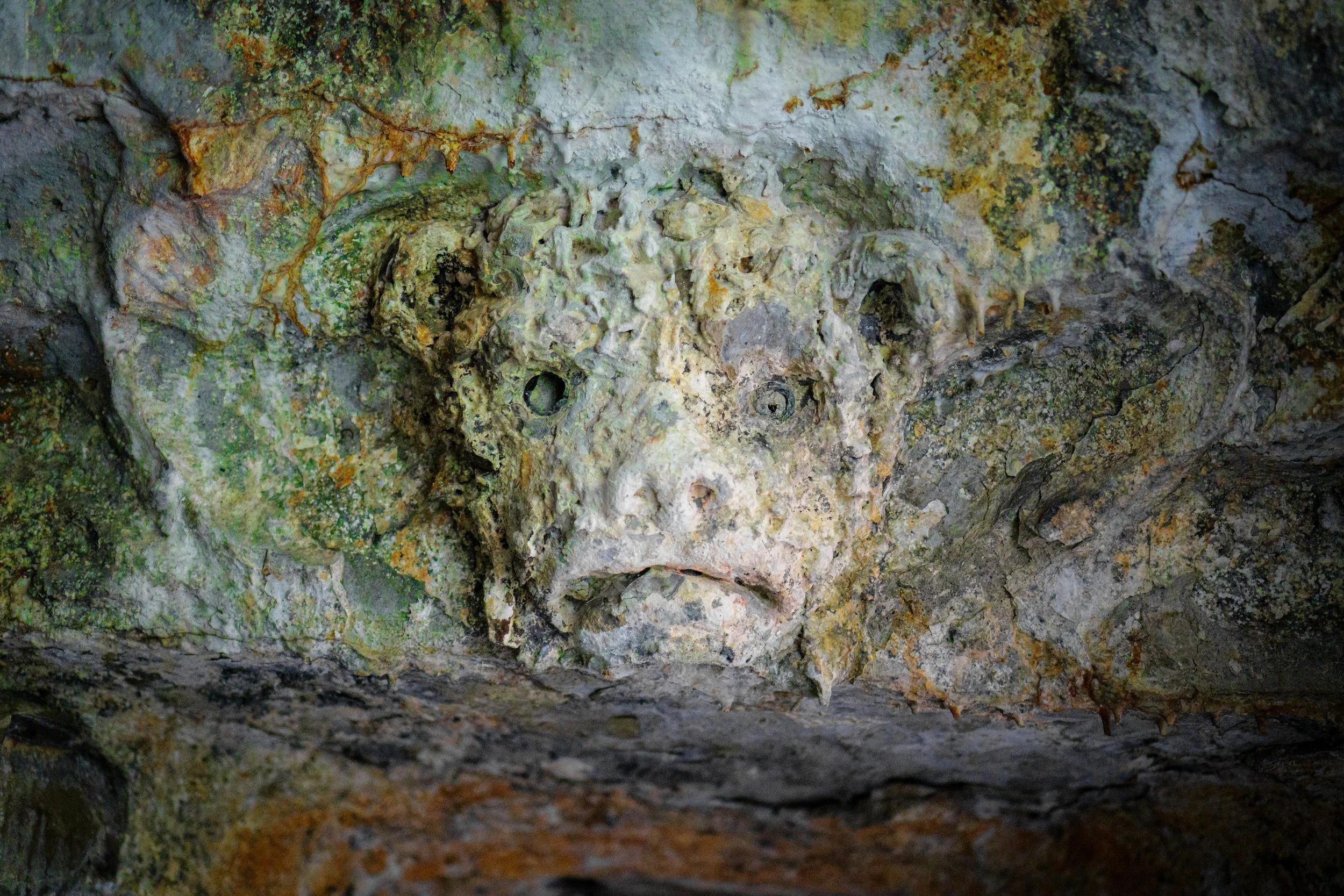
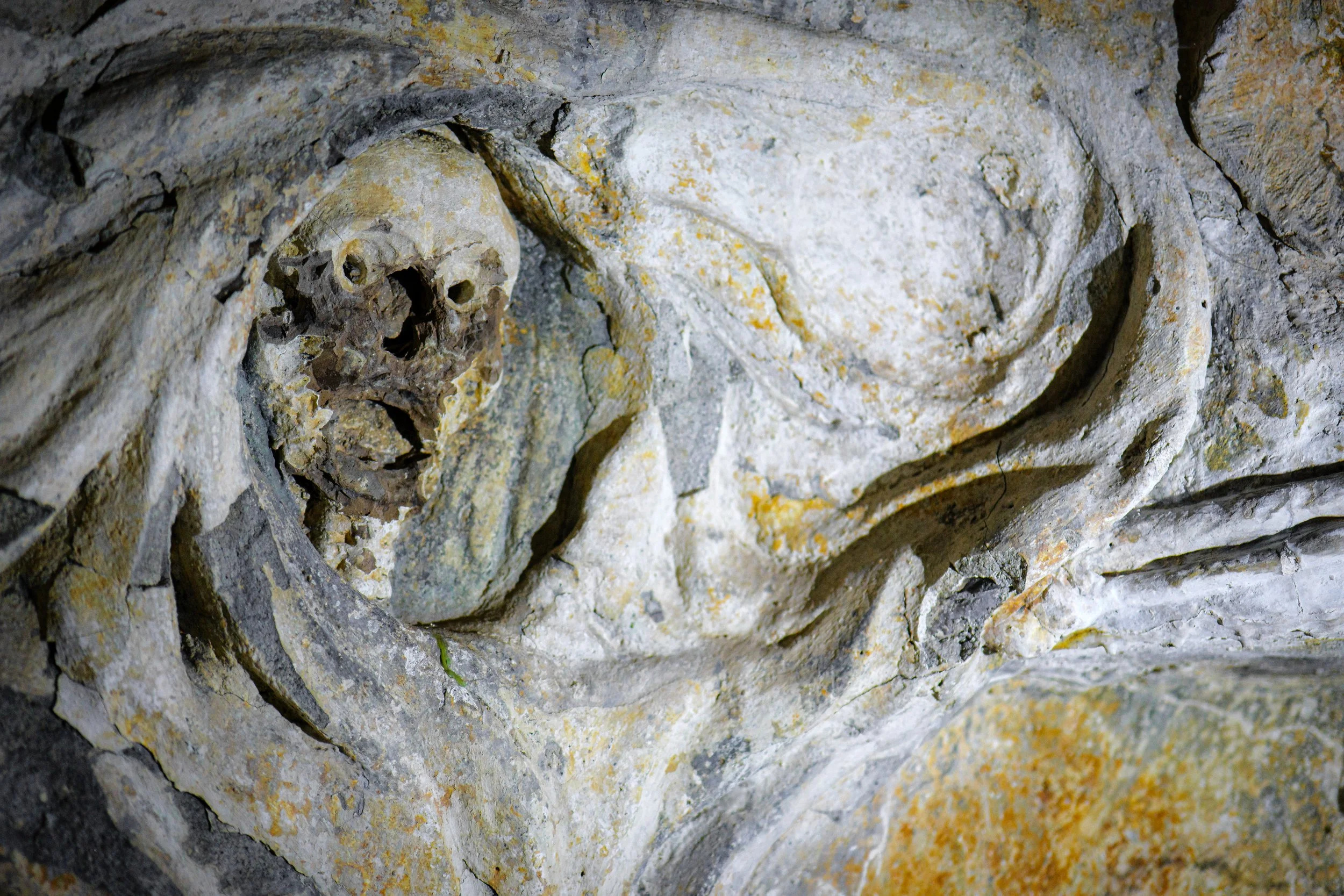
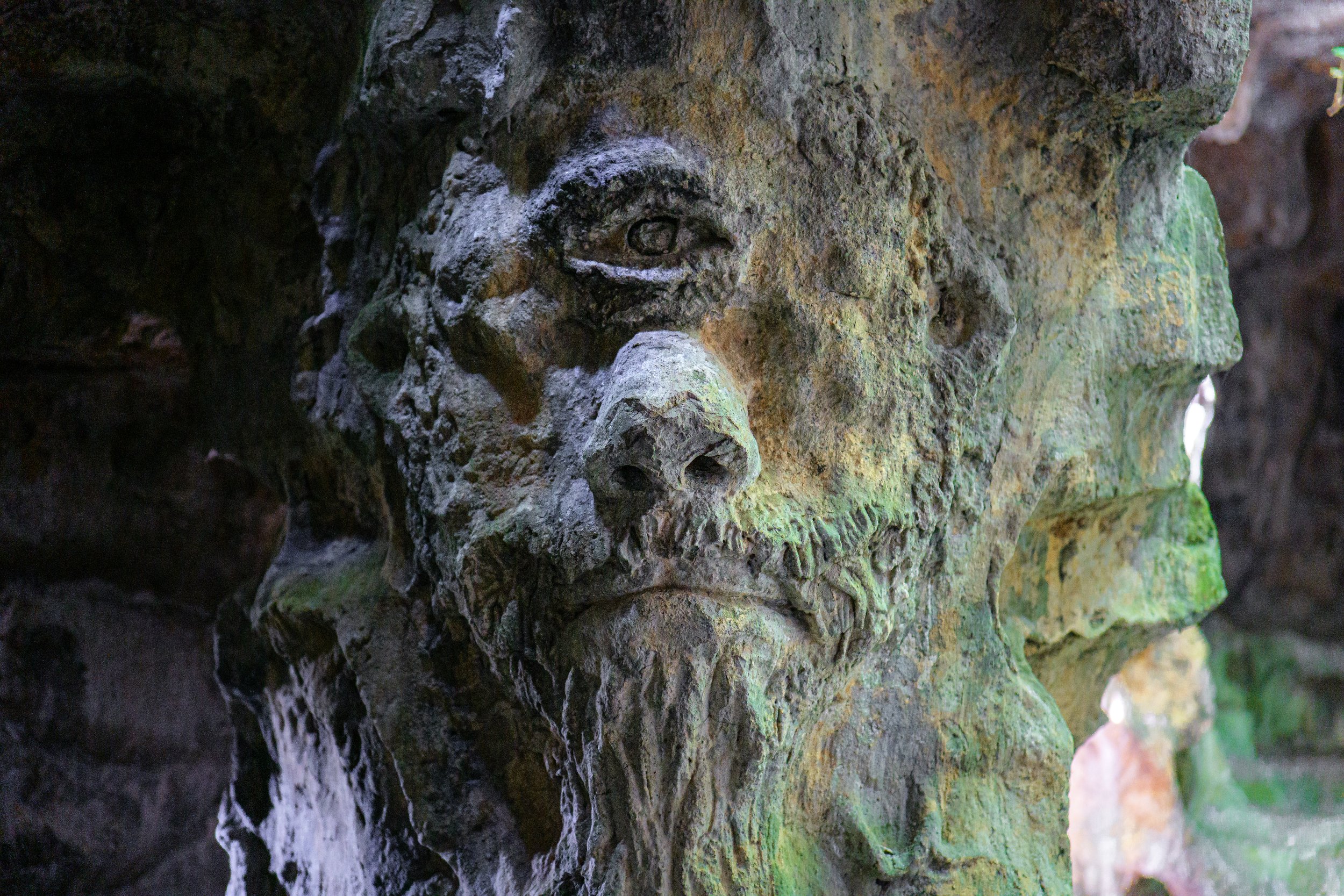
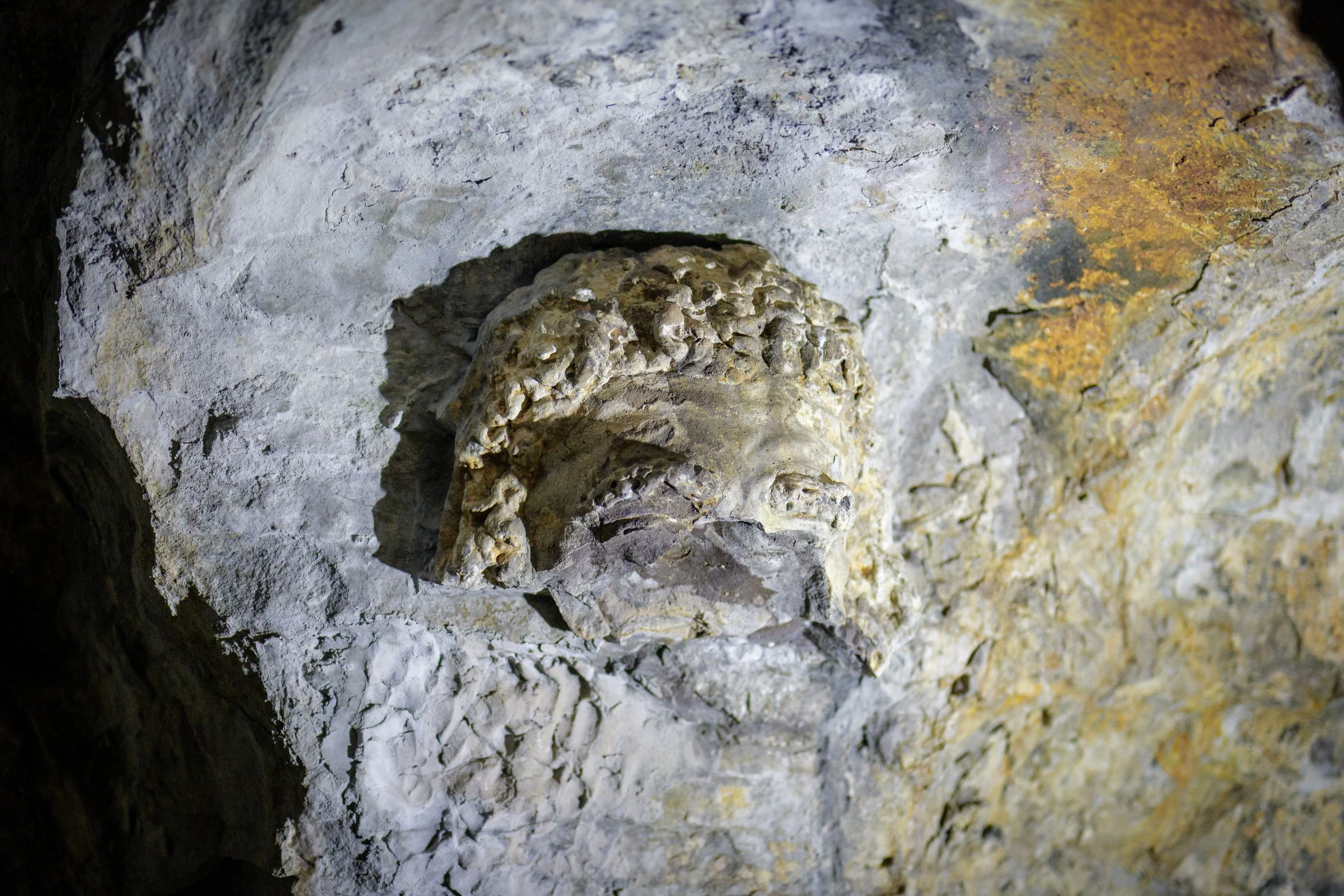
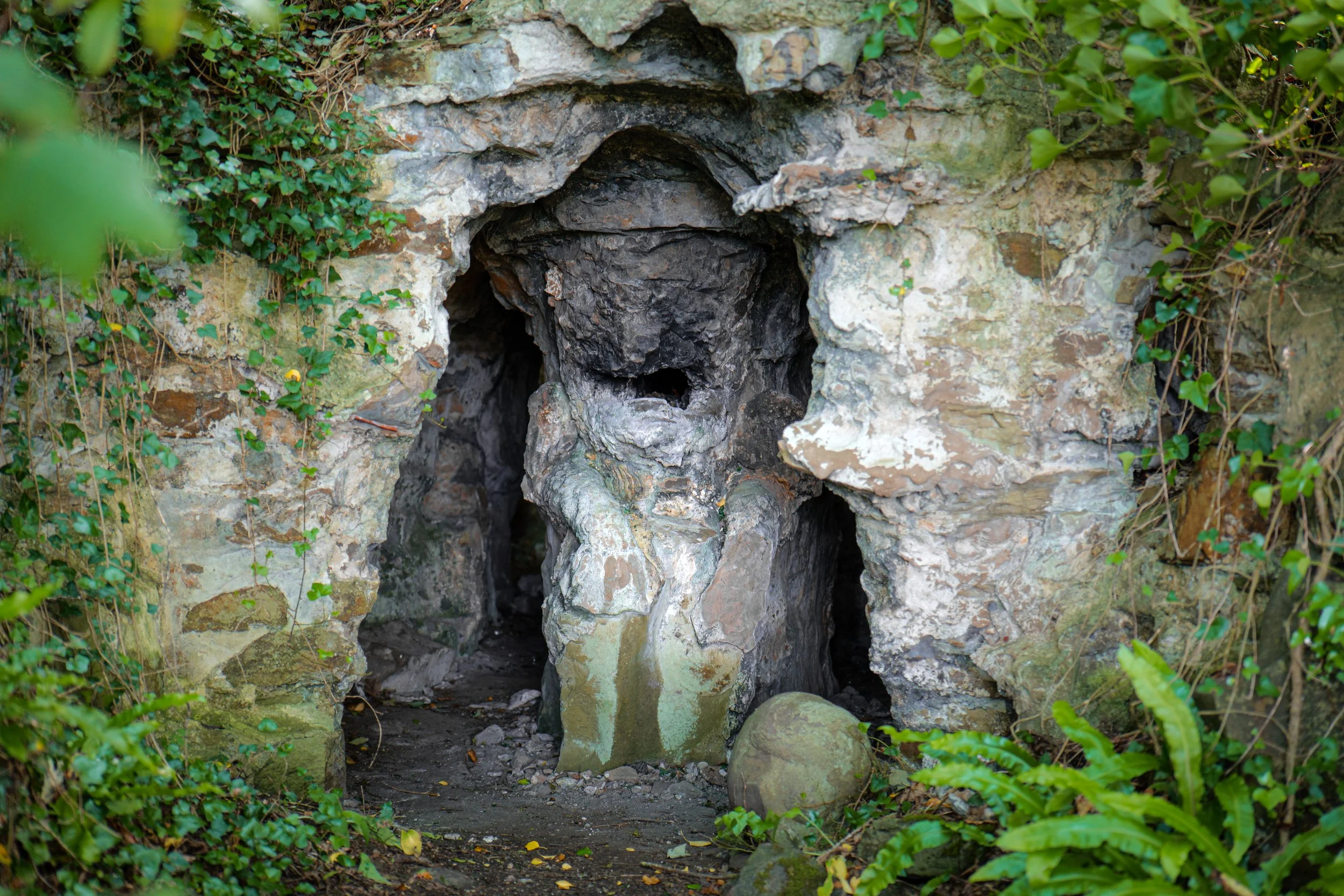
Talacre Hall operated as a Benedictine convent between 1919 and 1988 (appropriately rebranded as Talacre Abbey) and in close proximity to the grotto there’s an atmospheric nun’s graveyard consisting of simple black iron crosses peeking through the undergrowth at skewed angles. This would ordinarily have been worth the price of admission alone, but in the moment it was somewhat overshadowed by the dark wonder of the grotto, and the challenging, contrasty lighting conditions of a summer forest at noon meant it was impossible to make a frame that did them justice.
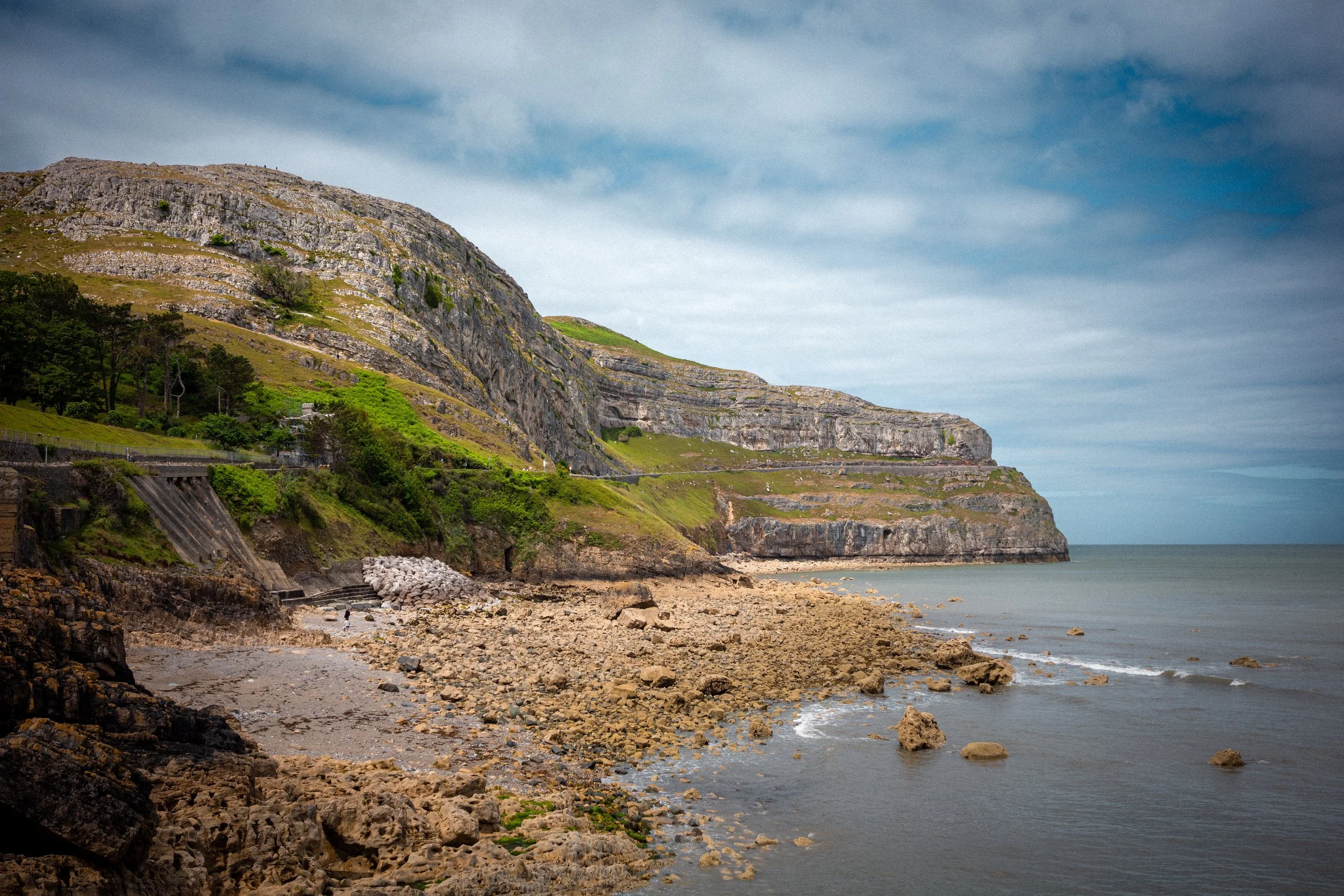
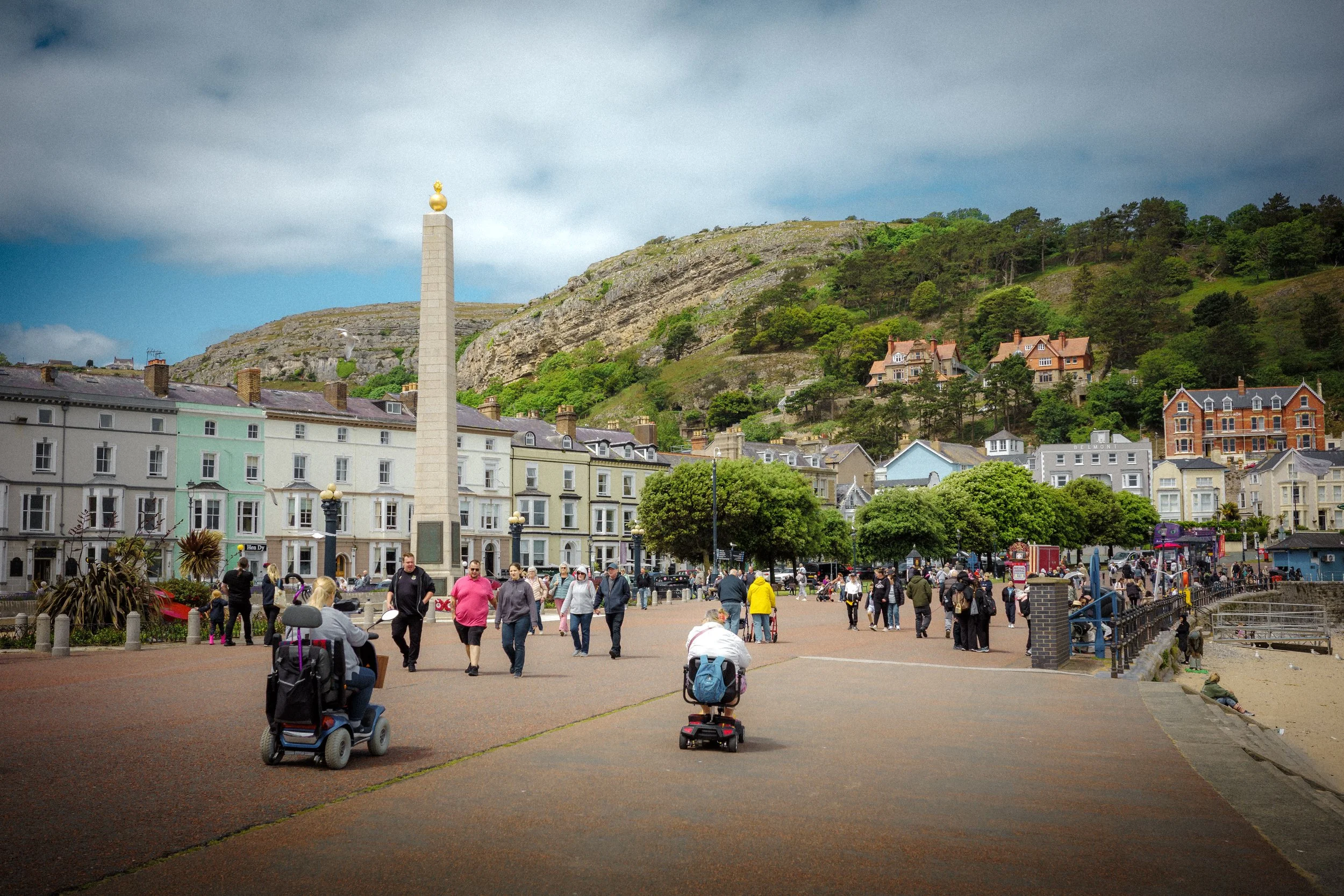
Despite its gothic character we didn’t find the site malignant or oppressive – indeed, my partner expressed a sincere desire to move in – but it’s certainly unsettling, and it was something of a relief to strike out for the light, air, and seaside kitsch of nearby Llandudno, where we stopped for lunch.


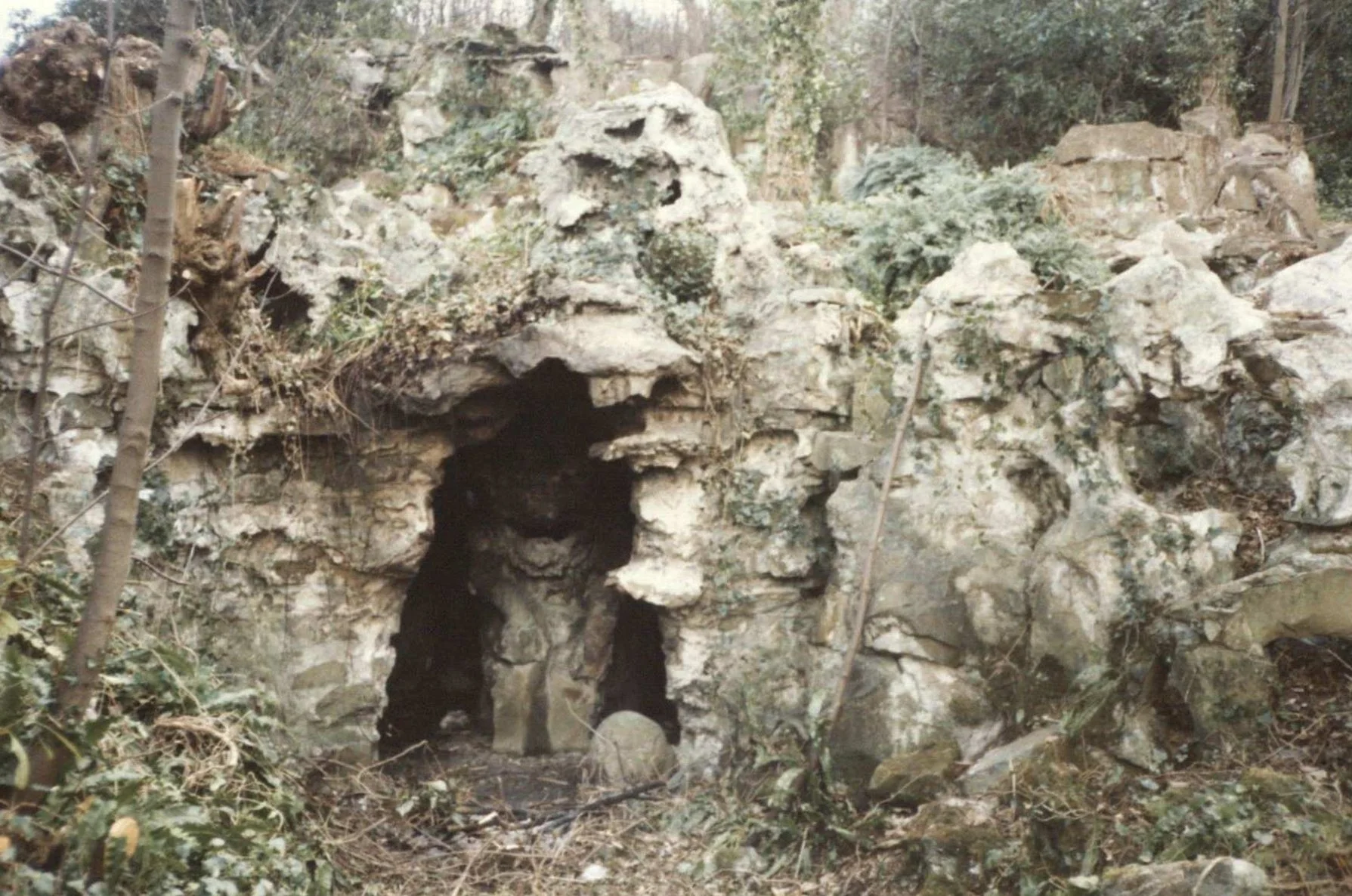
On returning home I did a trawl of various archive catalogues to see if I could find out anything more about the history and creation of the grotto. I didn’t turn up any documents available online, but in the holdings of North East Wales Archives I did discover a set of miscellaneous papers relating to Talacre Abbey (NT/1429) that include ‘photographs of grotto’. I obviously couldn’t resist ordering some scans of them; taken at some point in the 1980s, they reveal that the site looked largely the same at this point (albeit far less overgrown), and the muted colour palette of the film stock rather suits the character of the location.