A Ghost Street on the Outskirts of Derby: Queensway
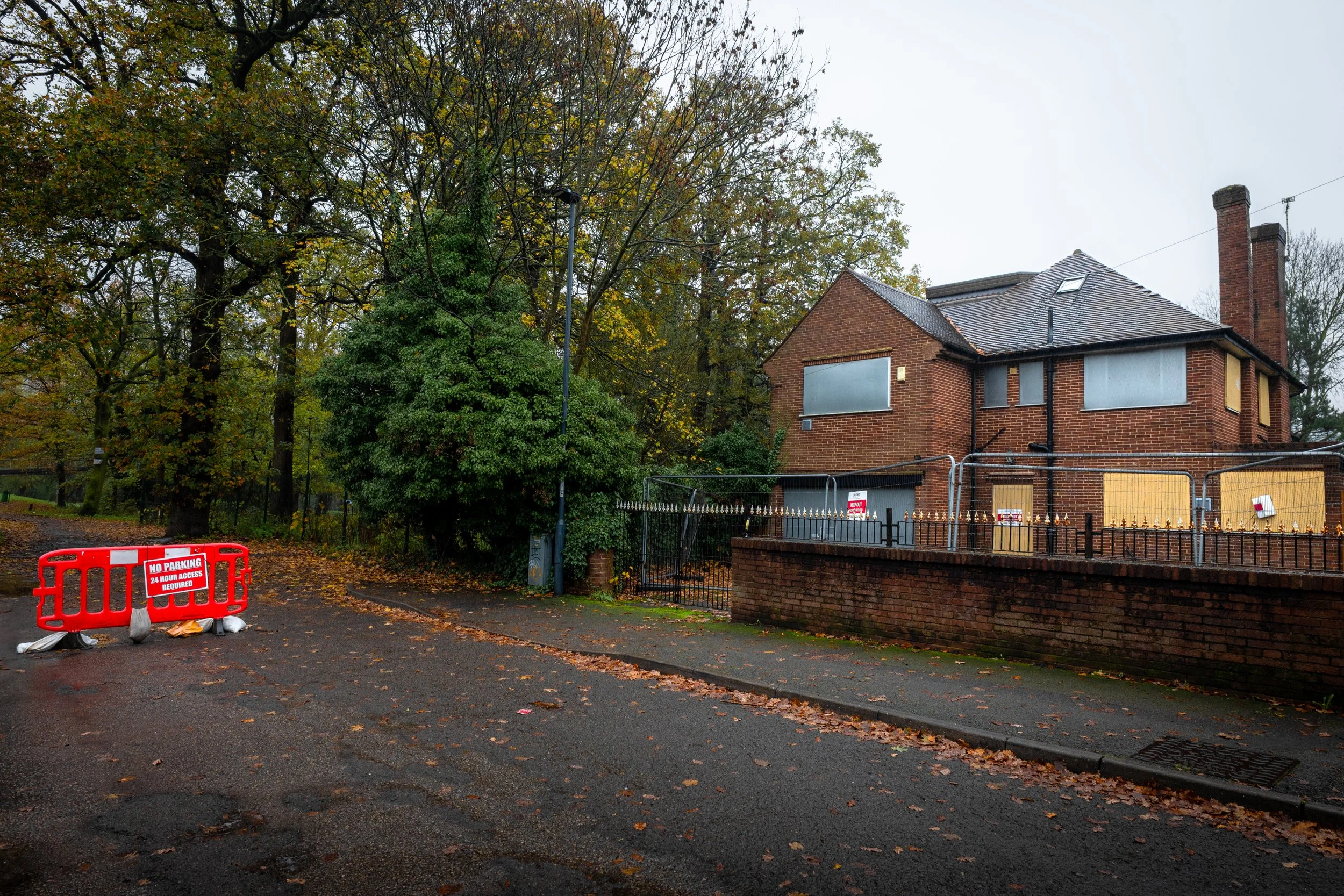
Queensway, Derby, Derbyshire.
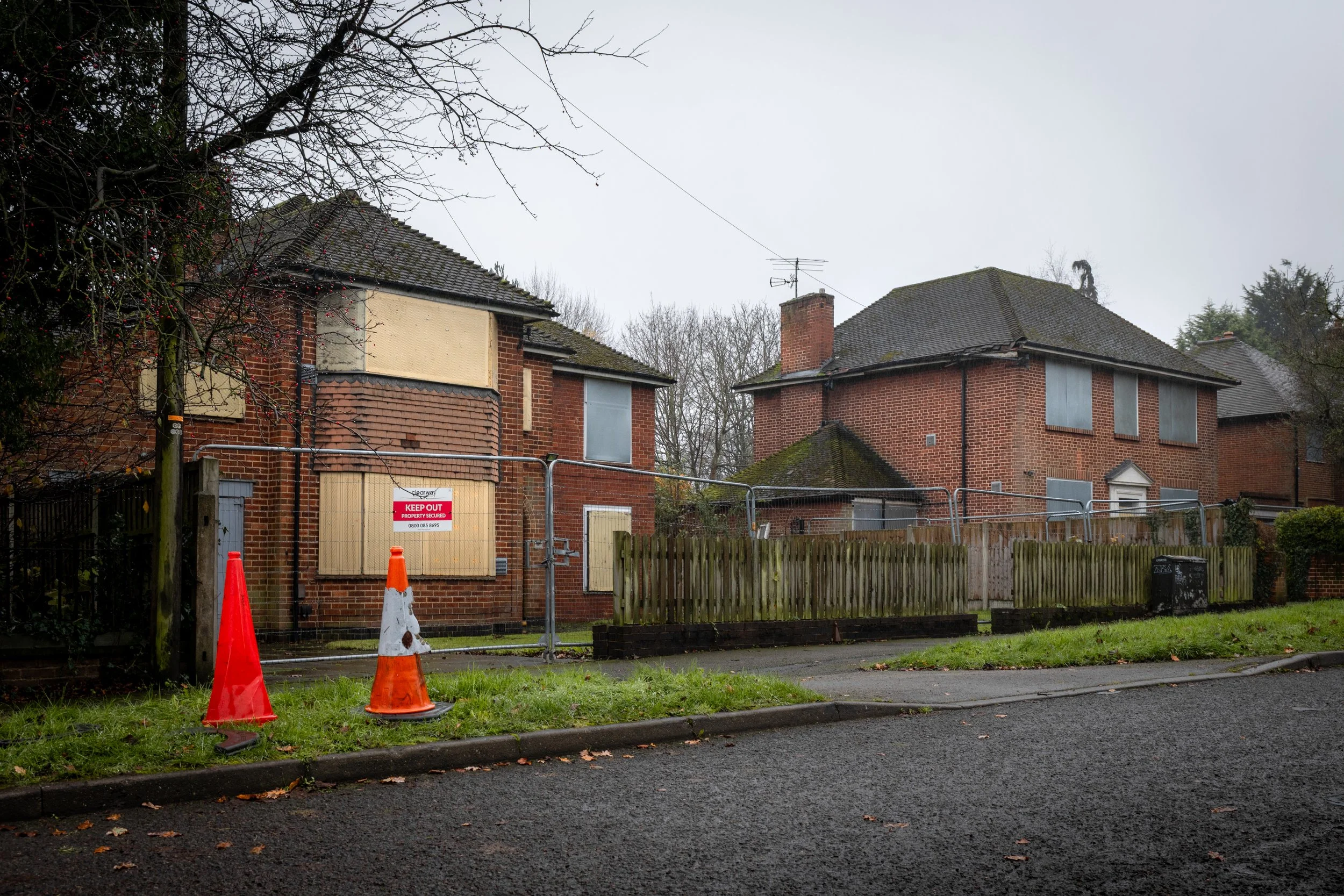
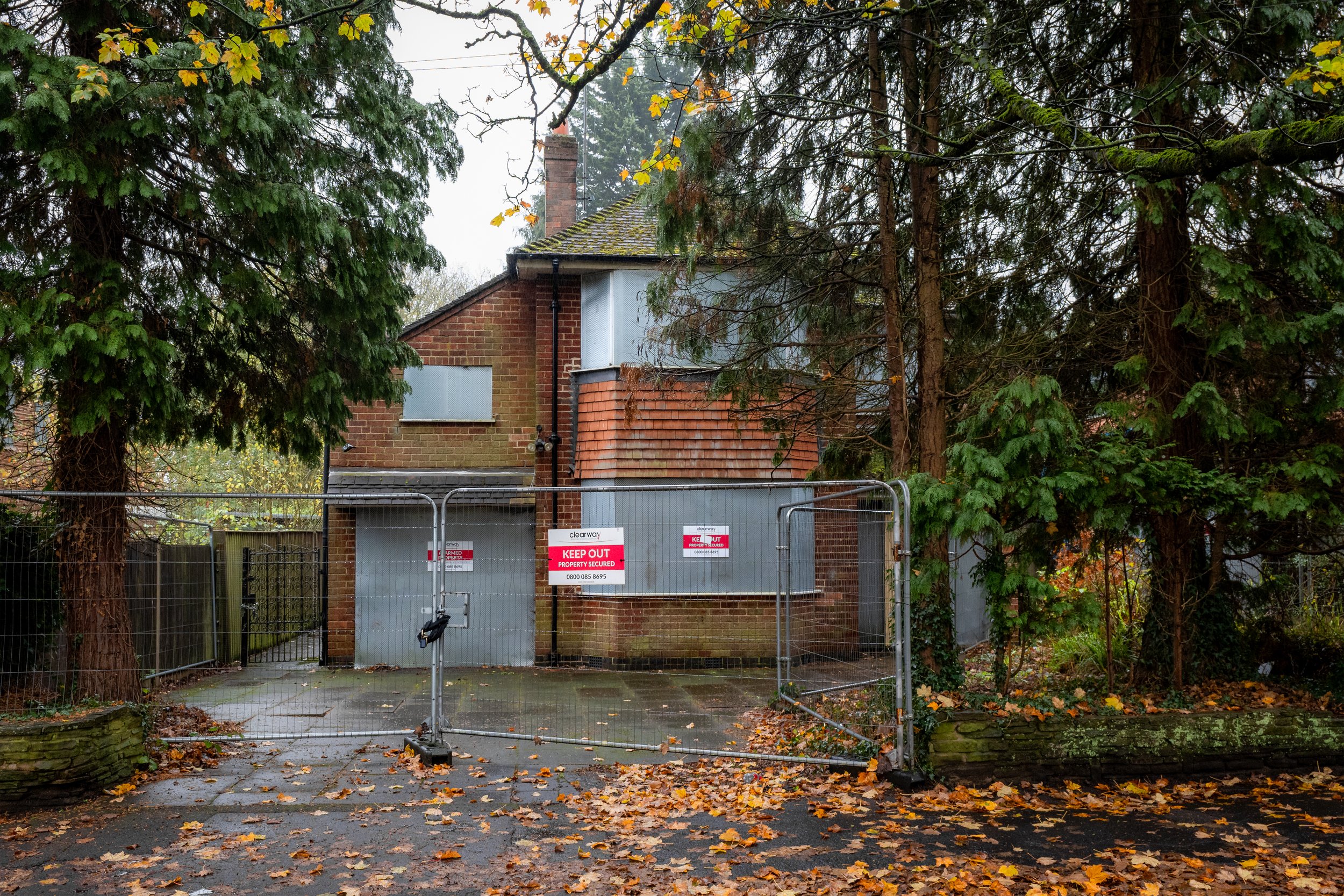
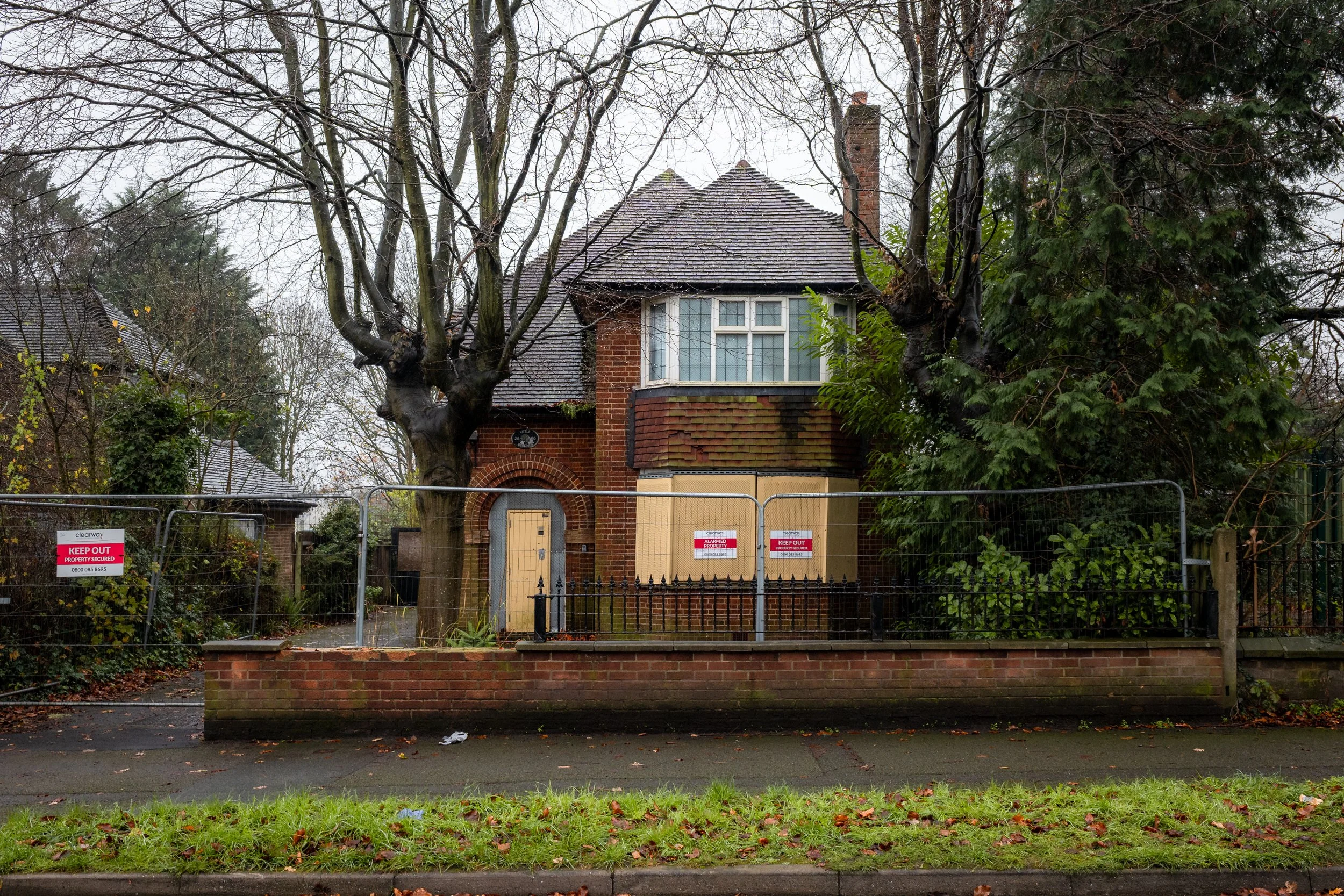
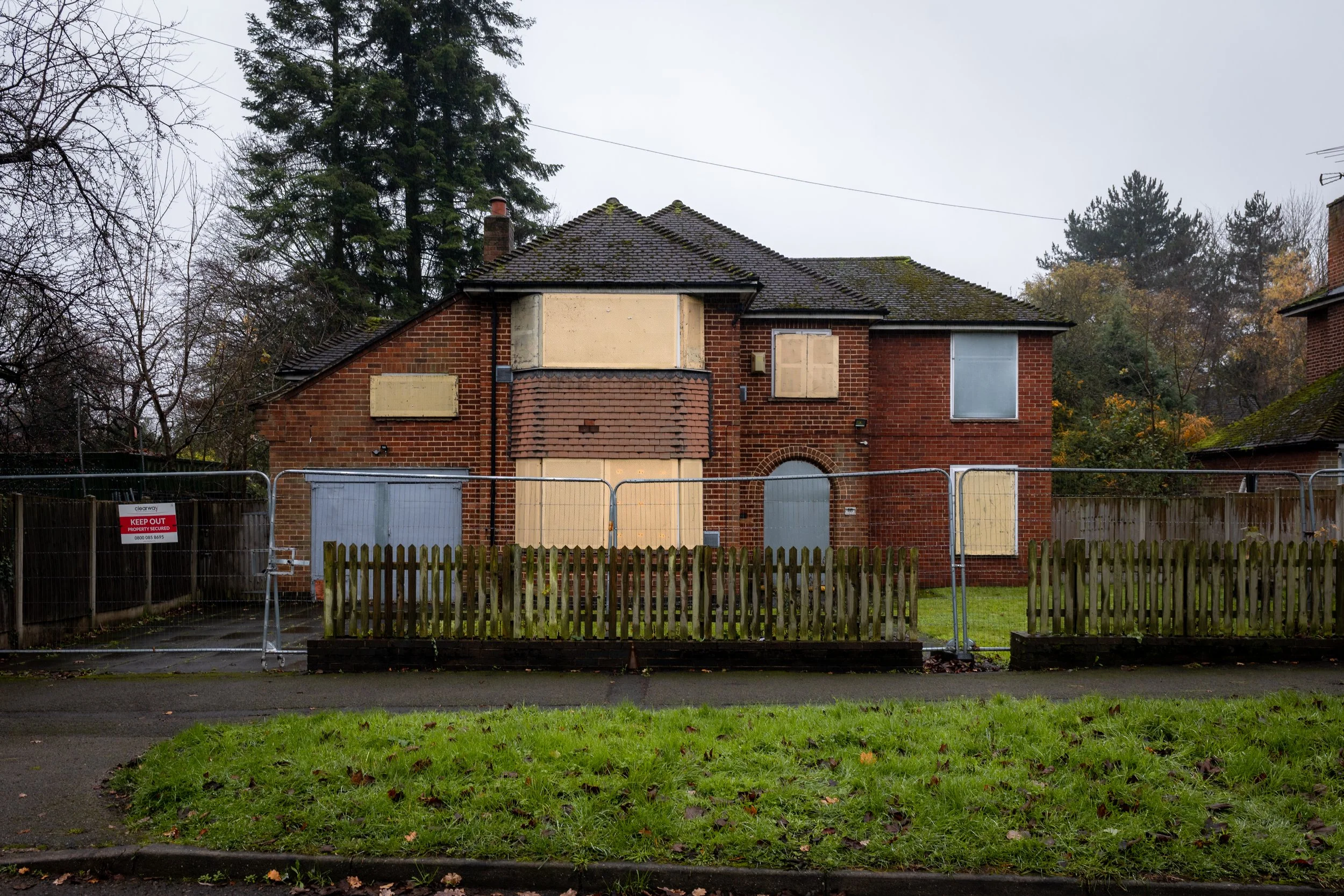
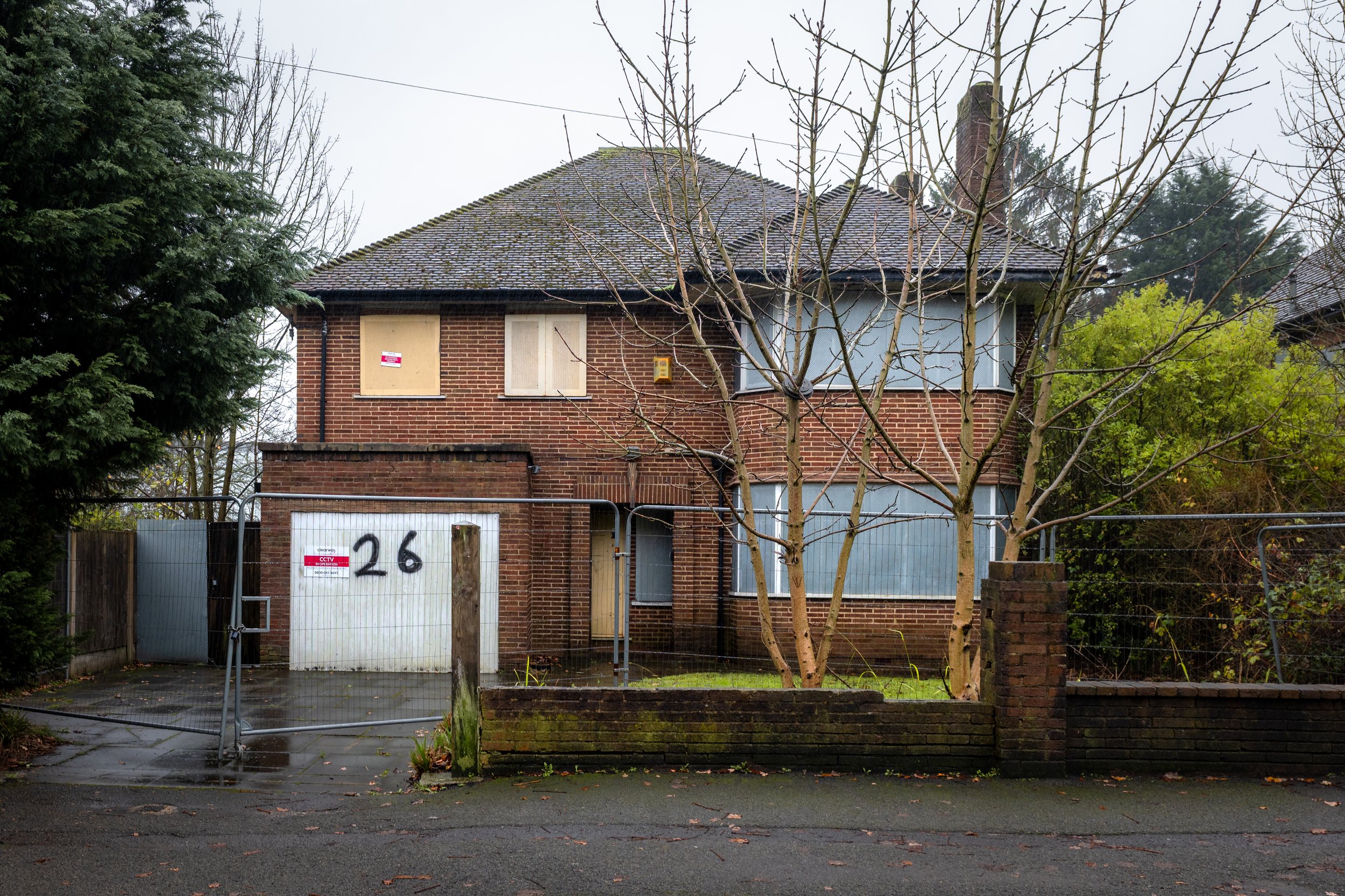
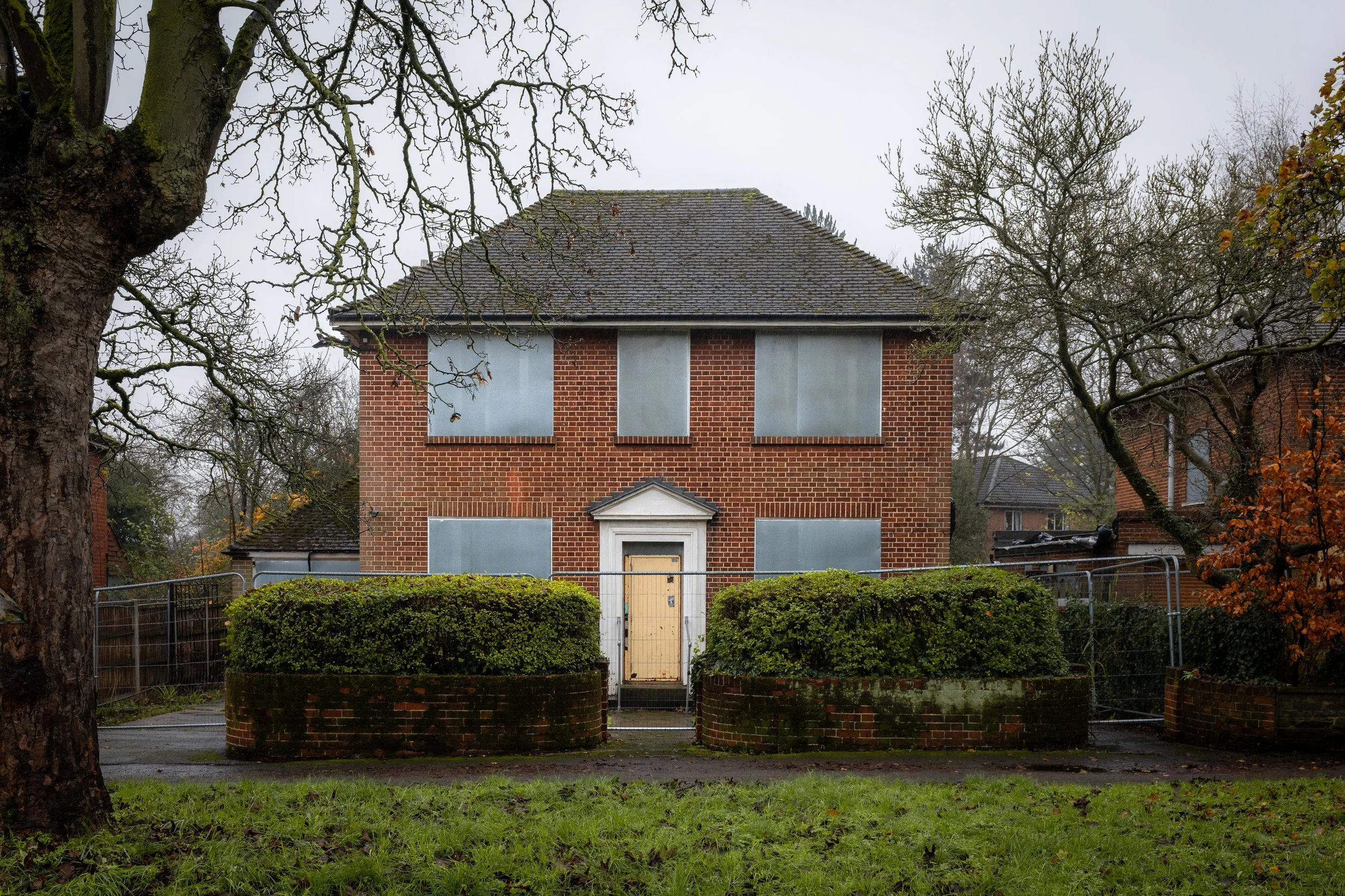
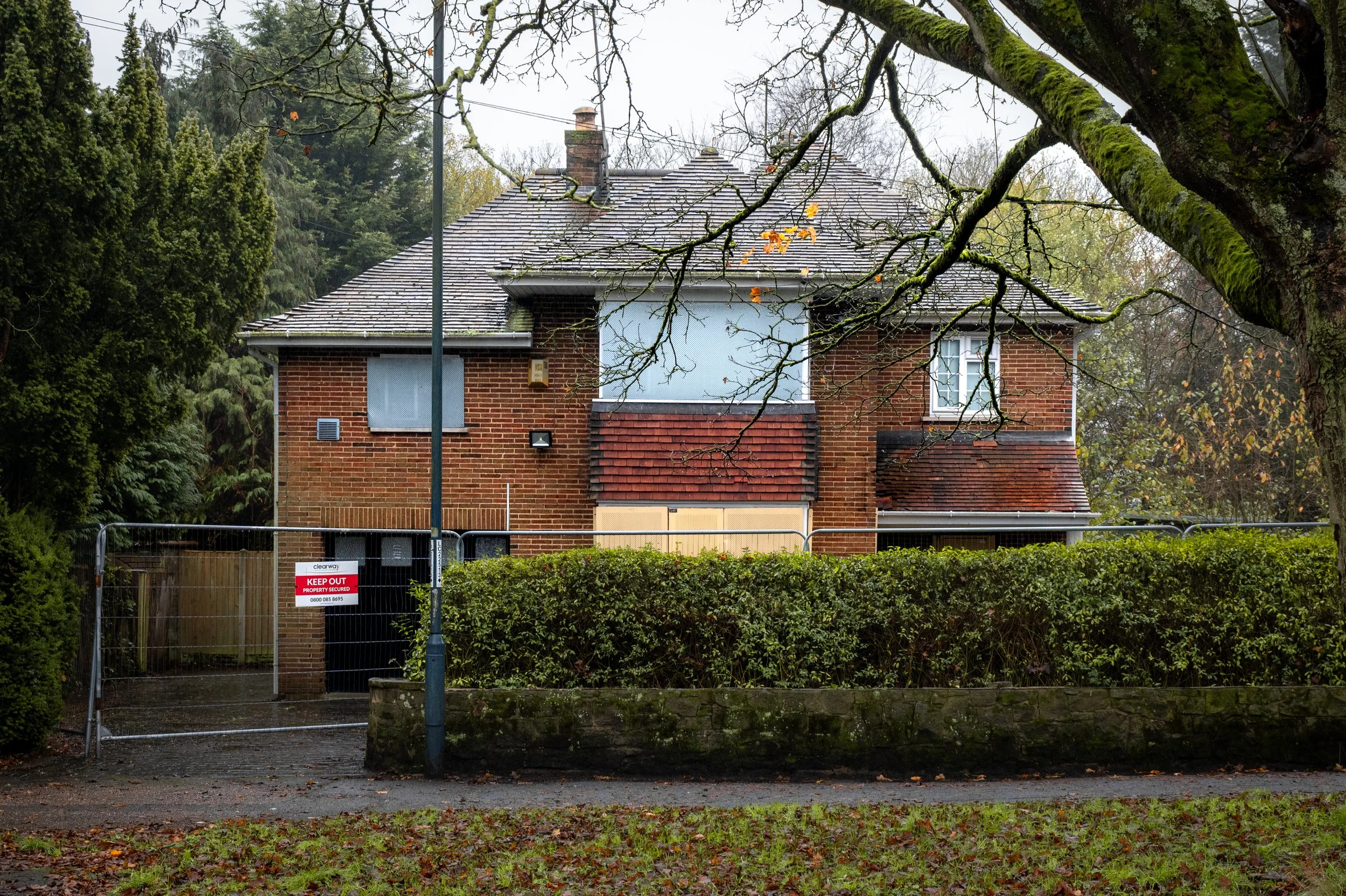
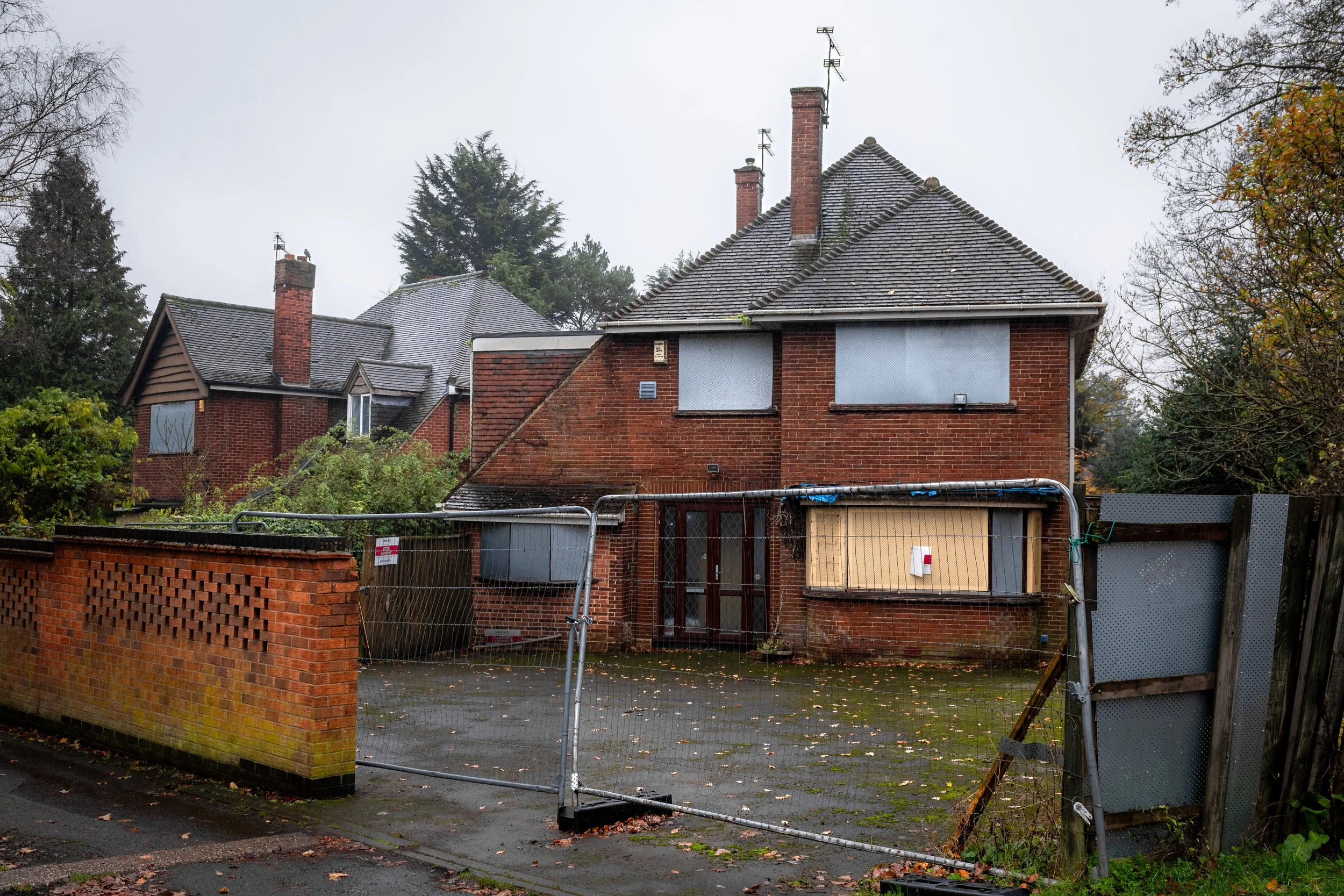
A few weeks ago, while passing through the suburbs of Derby en route to the small village of Osmaston to photograph a nineteenth-century sawmill, I spotted a boarded up house. Then another one, and another one, and another one; about fifteen in total, all in a row on the same stretch of road known as Queensway. An abandoned street is a first for me, and some Googling swiftly revealed the cause; the houses, all detached family homes built (I think) in the 1930s, were the subject of a compulsory purchase order by the National Highways Agency in 2019, and are set to be demolished as part of a £250 million project to widen the A38 on which they stand (a process which has, unsurprisingly, met resistance from some residents). I couldn’t stop thinking about them, so on the return leg we parked up in a nearby McDonalds so I could look at them properly.
Documenting abandoned houses on a thundering A road in the driving rain made for a refreshing contrast to Osmaston, a tiny and immaculately maintained estate village so peerlessly quaint it even has a duck pond. Despite being shuttered for over five years the properties aren’t in an especially advanced state of decrepitude; they’re still structurally sound, there have been few encroachments by nature beyond a few mossy driveways and unruly flowerbeds, and even most of the exposed windows are still intact. Indeed, were it not for the wooden boards, metal shutters, security fences, and warning signs, it would be hard to tell they were abandoned at all. However, somehow this excellent state of preservation only made them more mournful and Marie Celeste-like, and the visual signifiers of abandonment more incongruous and unsettling, as if they were crime scenes. In terms of gaining access they’re all locked down extremely tight, but I wouldn’t have been tempted in any case; I’m too highly strung to be a bona fide urban explorer, and don’t especially enjoy taking pictures of interiors.