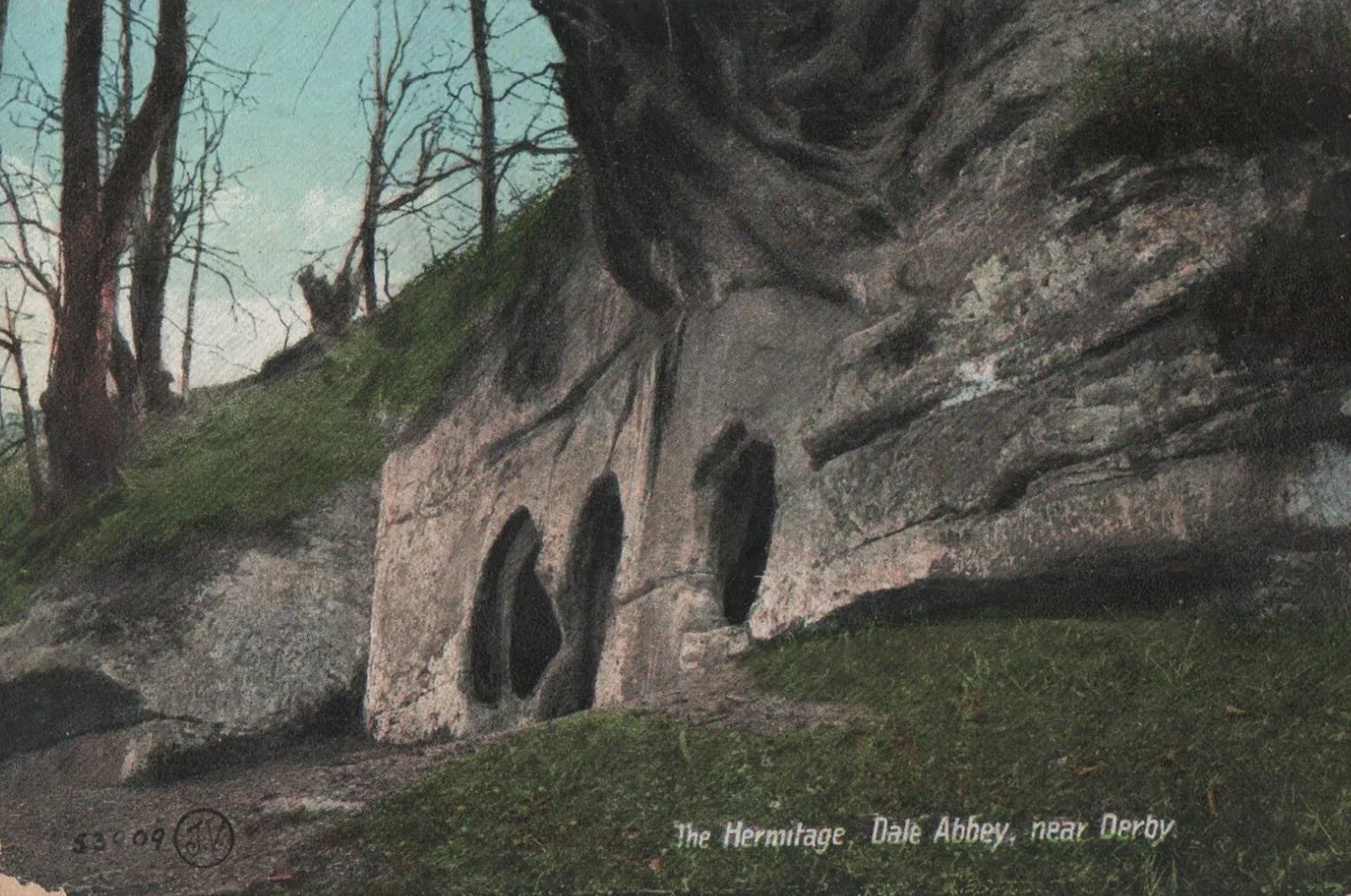
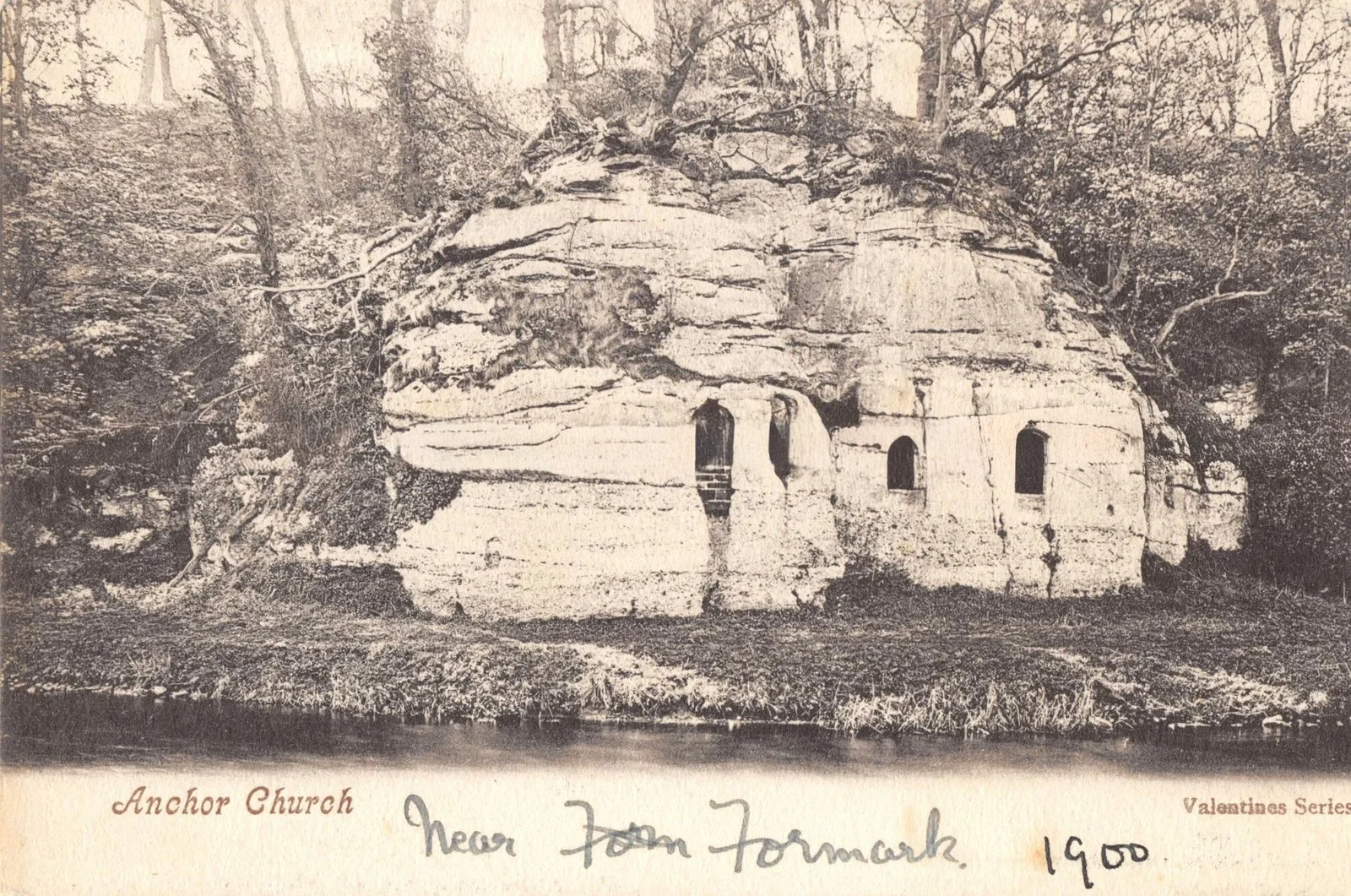
To the Hermitage(s)
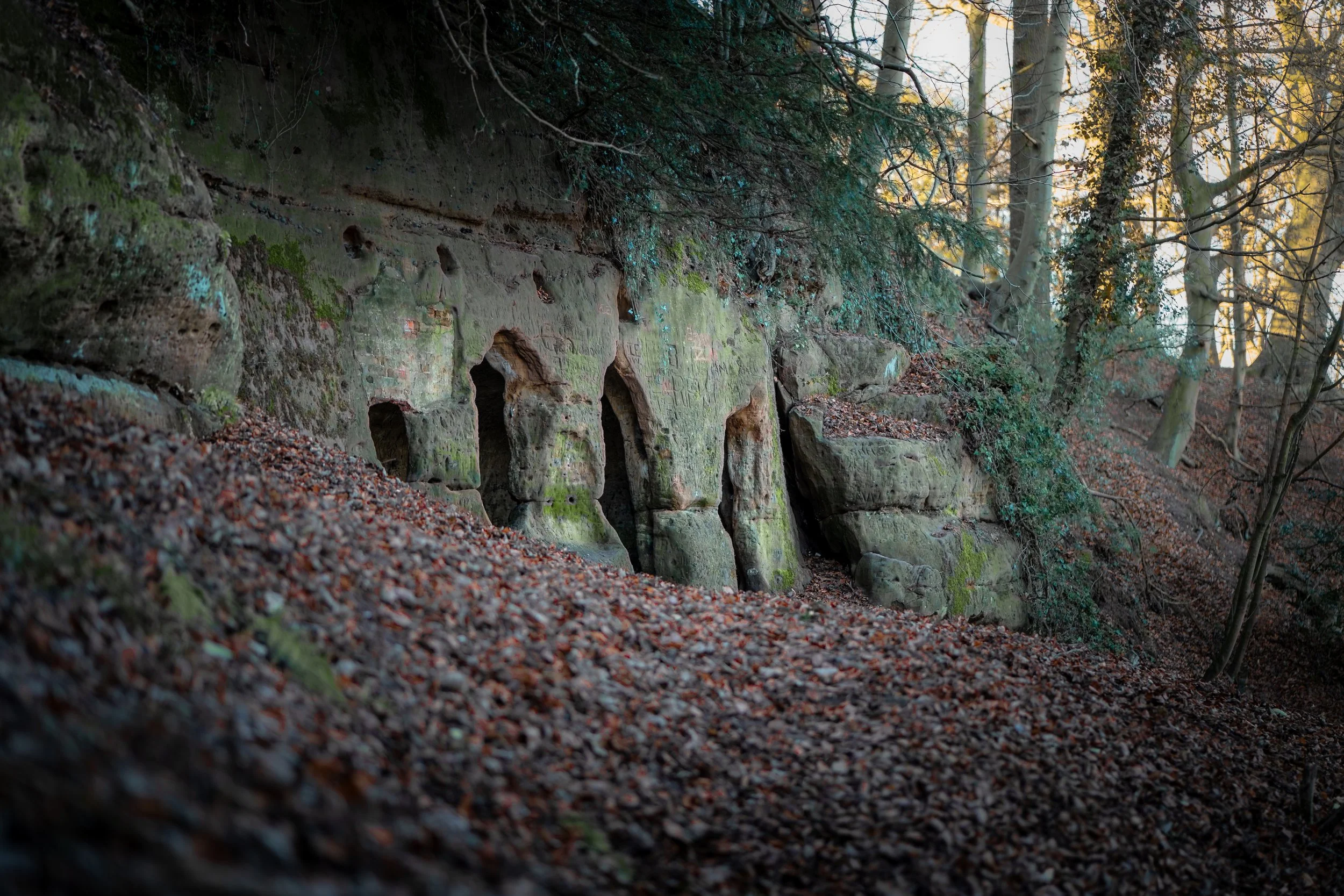
Dale Abbey Hermitage, Derbyshire.
A highlight of my Christmas exploring – an epic odyssey that saw me accumulate nearly 300,000 steps across over twenty cursed locations – was a visit to two medieval hermit houses in Derbyshire, Dale Abbey Hermitage and Anchor Church Caves. They’ve been on my list for ages, but for some reason I thought they were in the middle of nowhere (which can be problematic for a non-driver like me); in fact, they’re in small villages on the outskirts of Derby, both well connected by public transport, meaning I could not only visit them but tackle them both within a single excursion. You just can’t beat a hermitage; given my antisocial and overthinking tendencies a life of contemplative seclusion has always appealed, while dwellings done out of rock in isolated rural settings will never not be intense and creepy, especially as their gaping makeshift doors and windows give them the appearance of jack-o-lanterns. As Simon Roffey observes in his excellent and refreshingly personal An Archaeological History of Hermitages and Eremitic Communities in Medieval Britain and Beyond (Abingdon, 2023), they’re ‘spaces… pregnant with boundless possibilities’.
Dale Abbey Hermitage
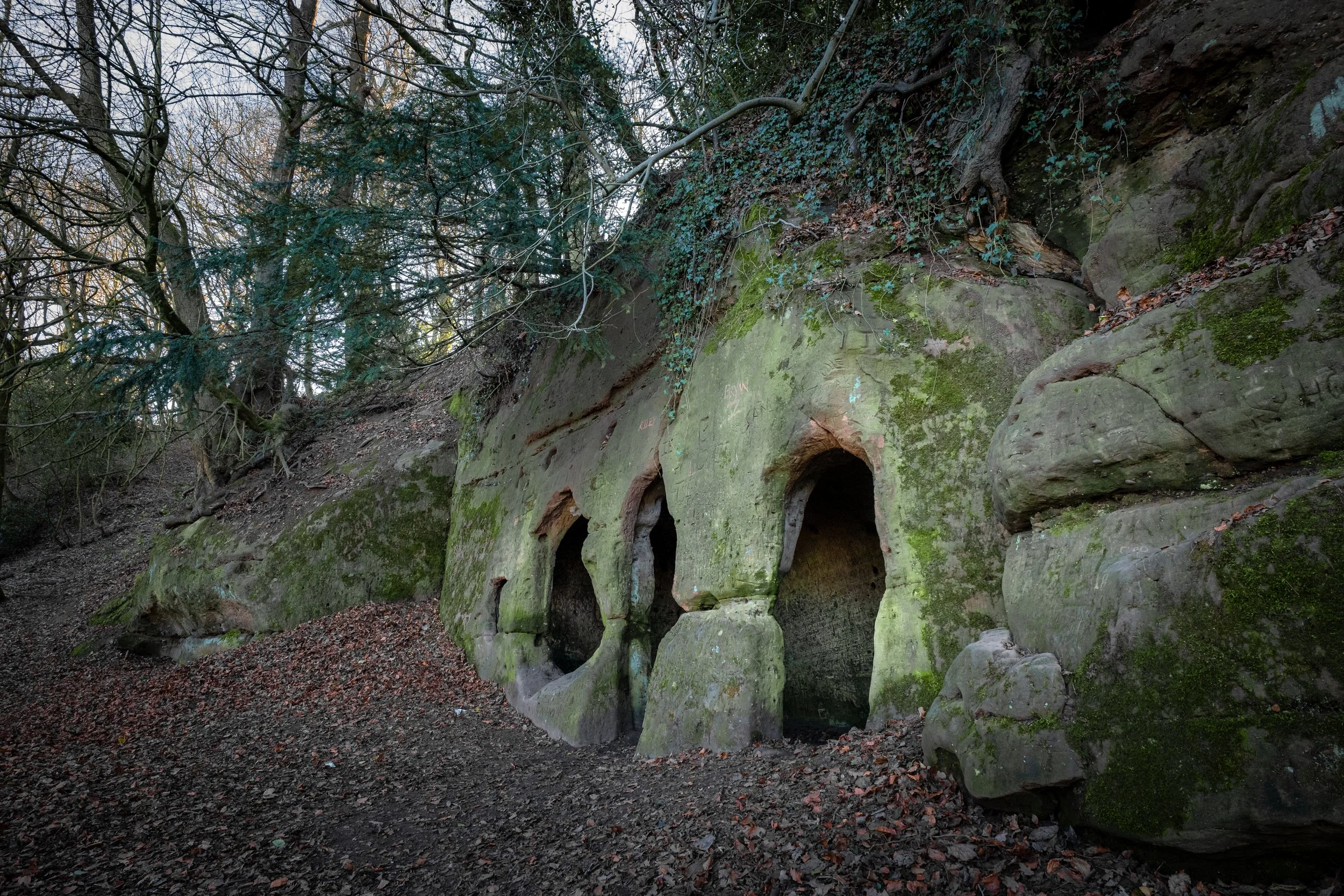
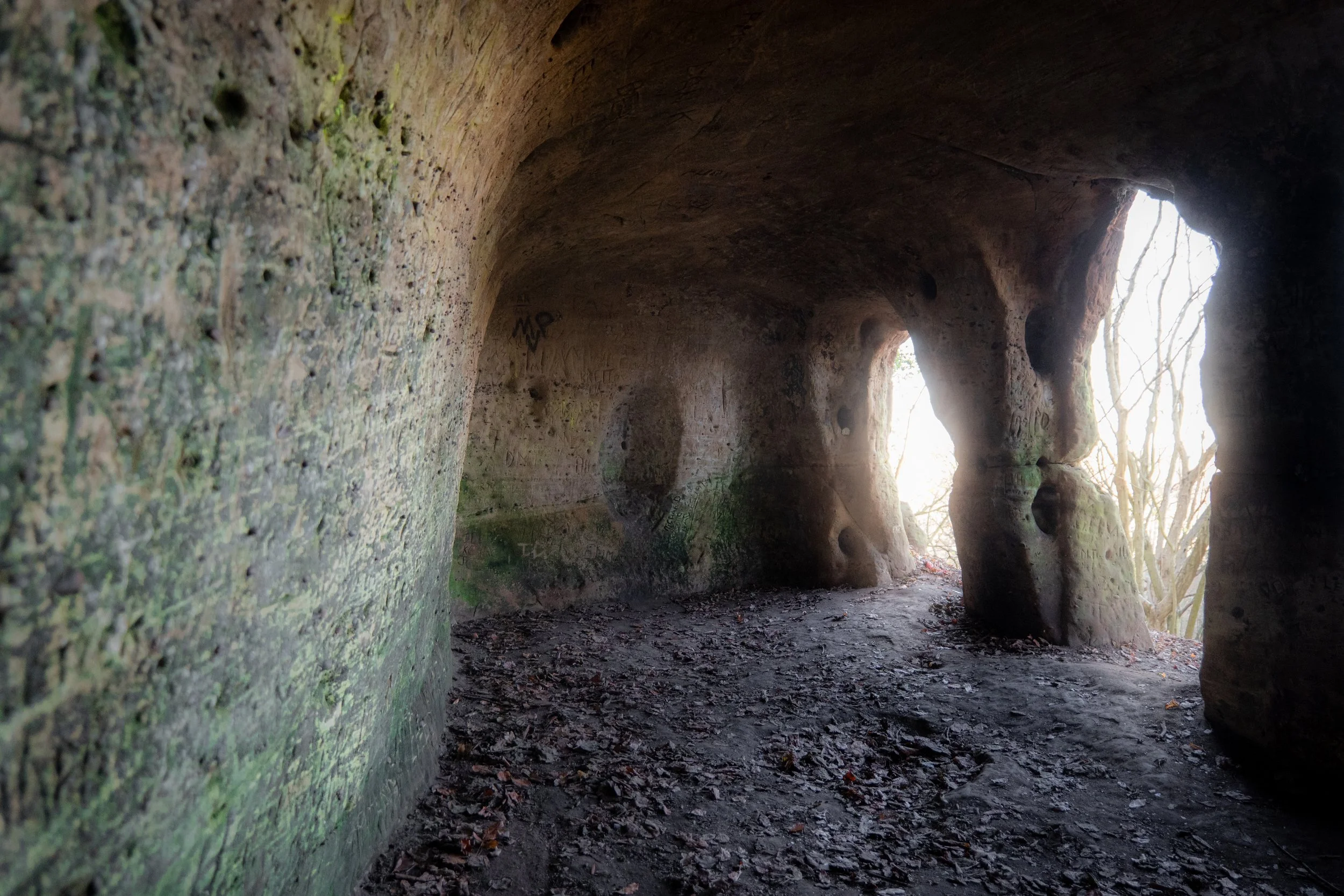
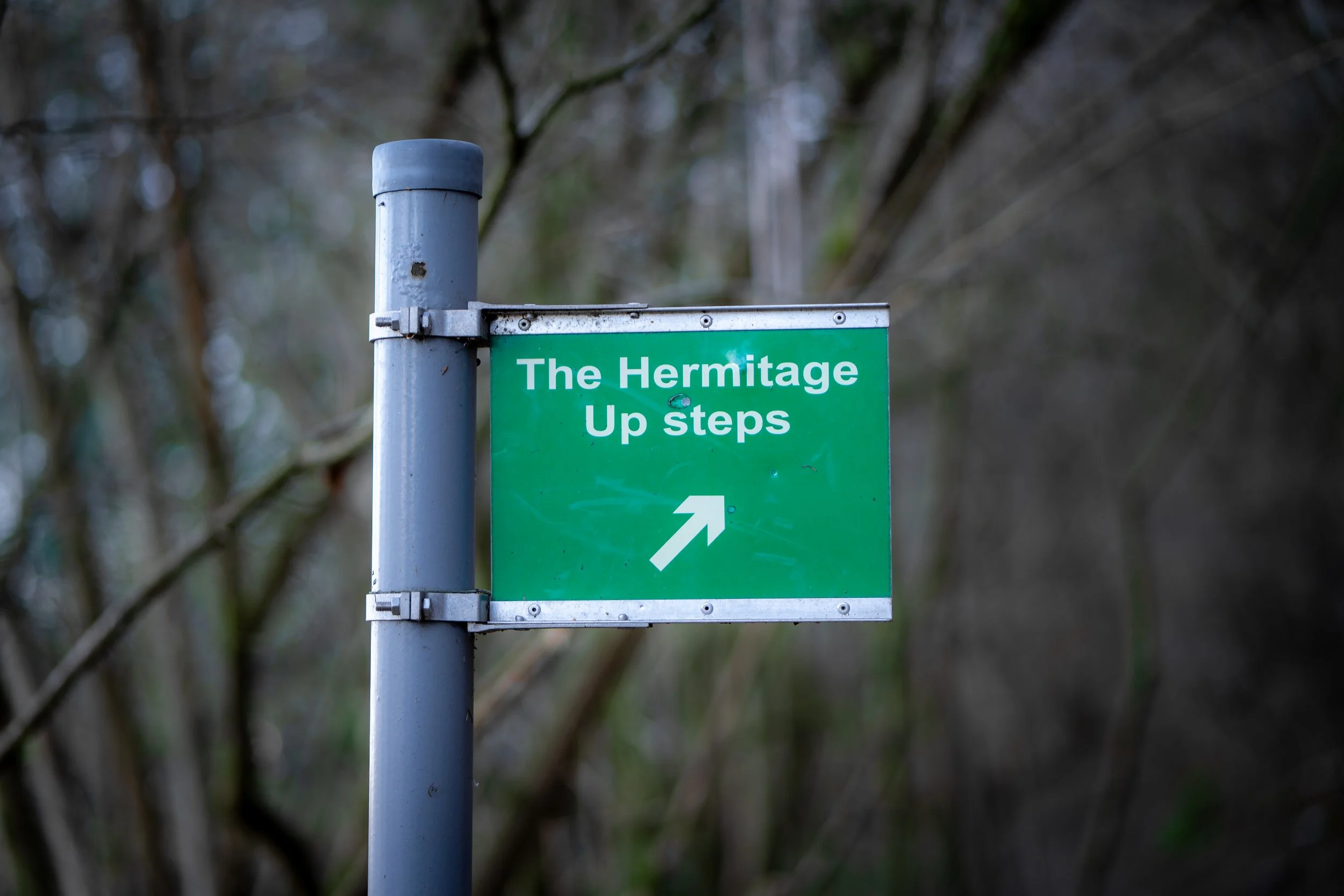
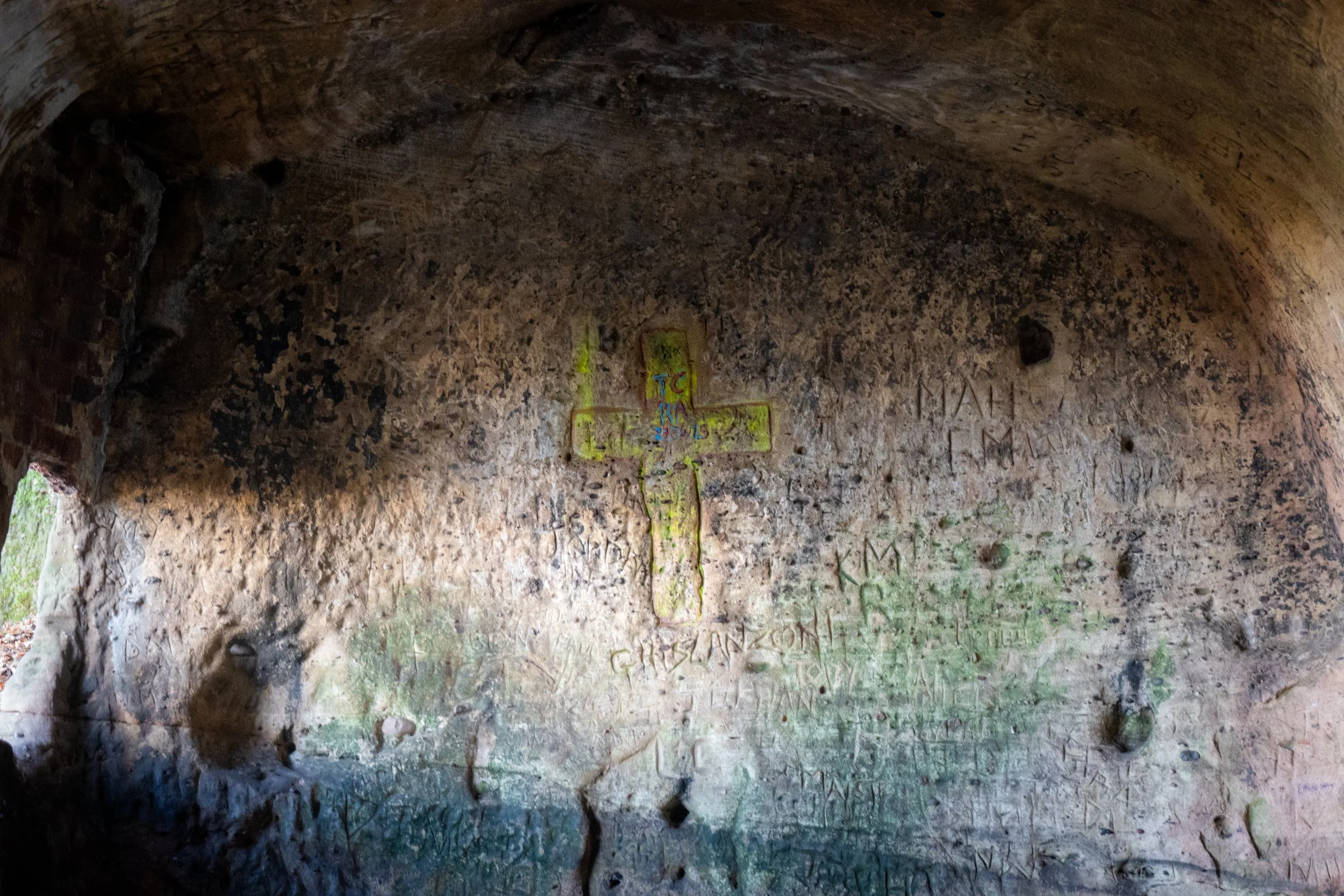
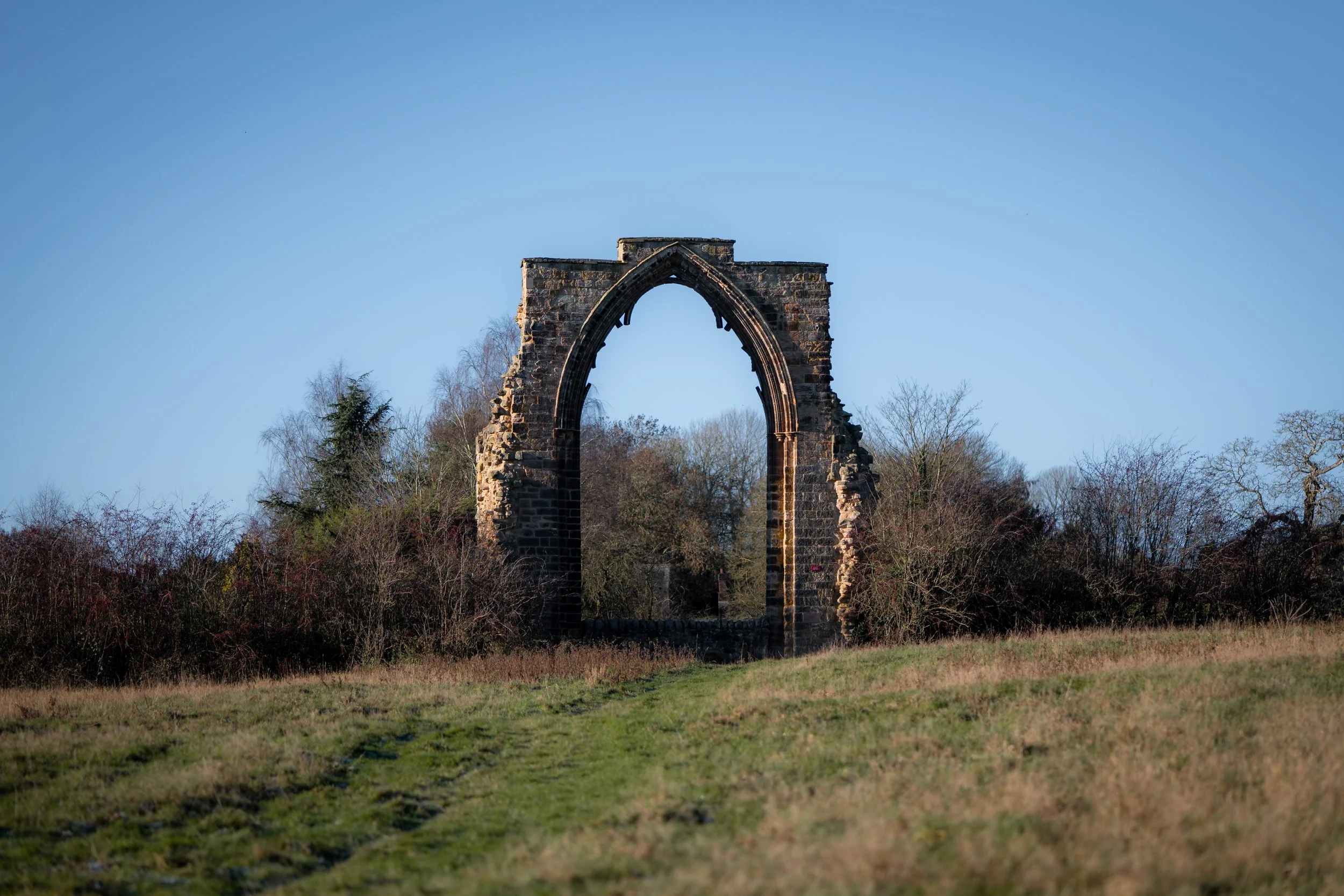
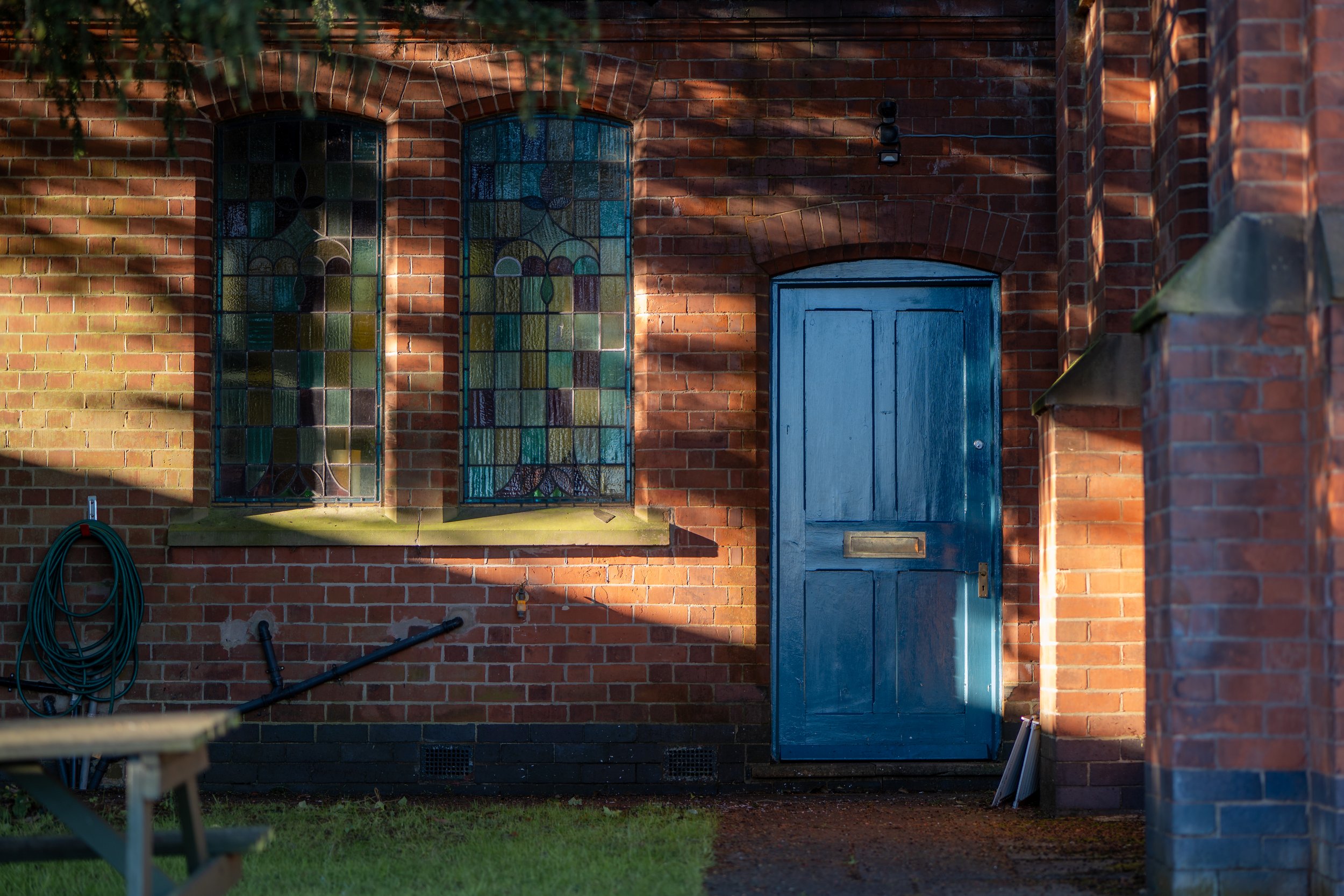
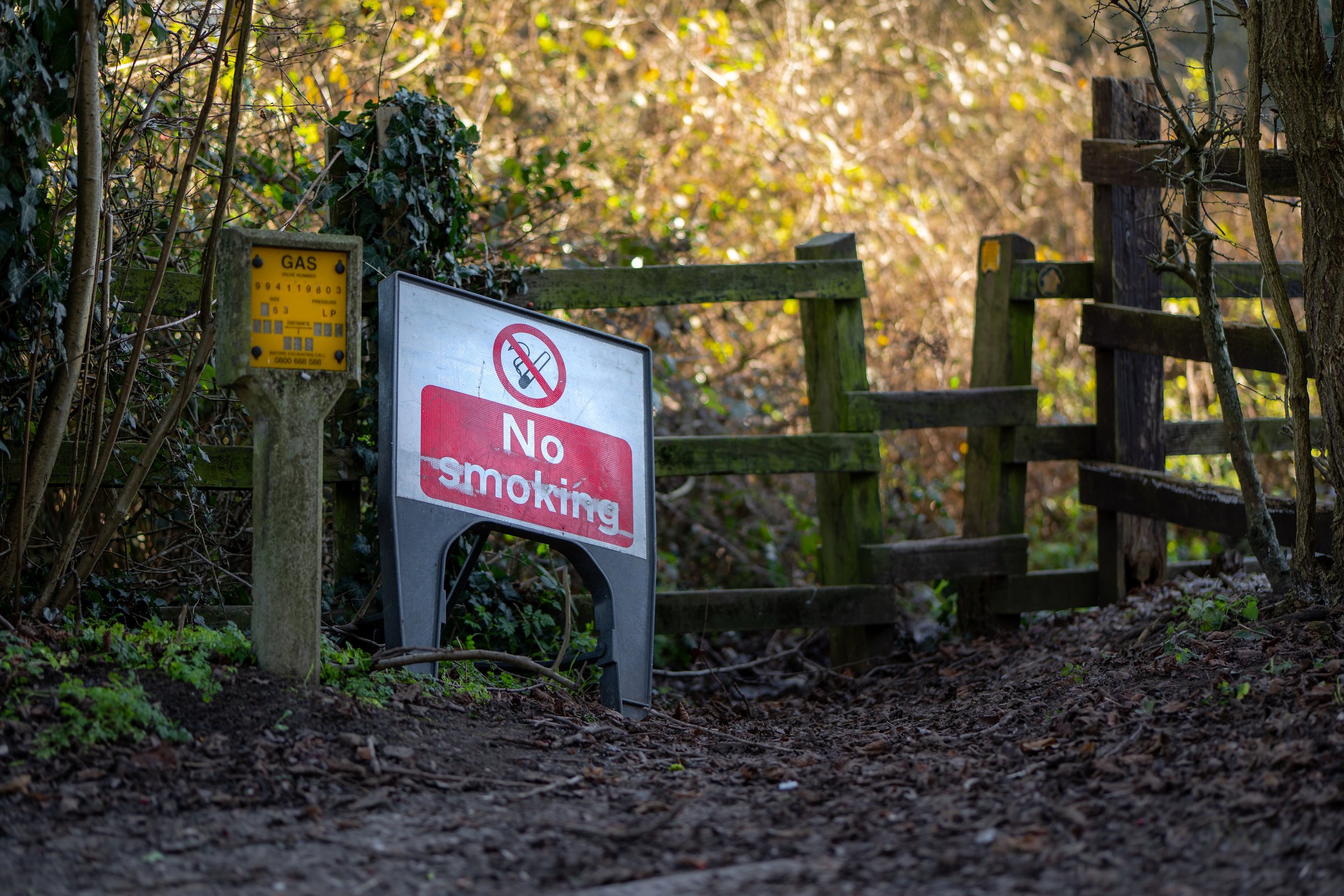
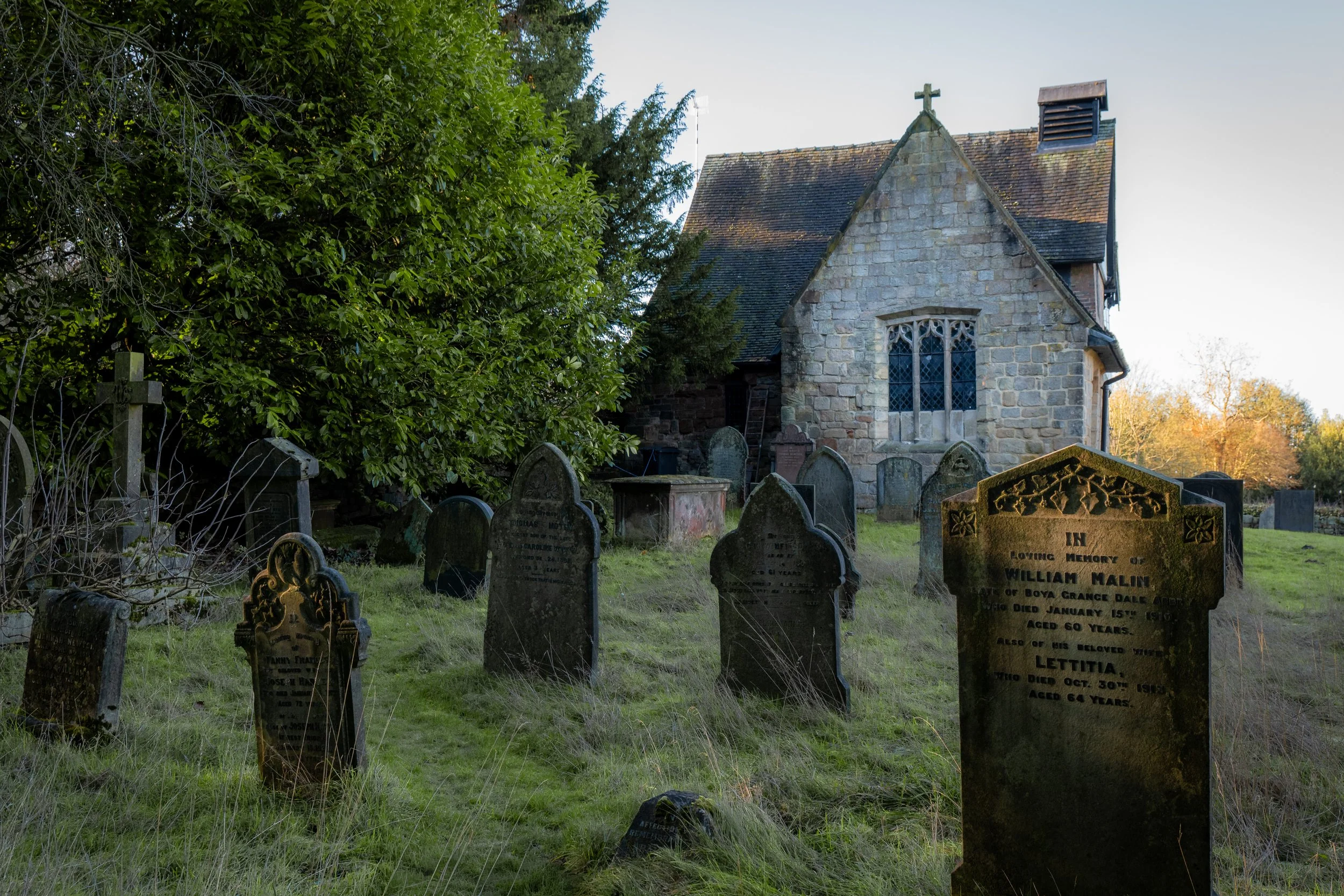
I visited Dale Abbey Hermitage first, which is carved into a sandstone escarpment in a small deciduous woodland (now known as Hermit’s Wood) a short walk to the south of the eponymous village. It has a delightful origin story, being created in 1130 by a Derby baker called Cornelius after the Virgin Mary appeared to him in a dream and told him to go to Depedale – the former name of Dale Abbey – and devote his life to the solitary worship of God. It was and remains divided in two parts; the western end was a chapel (complete with a stone cross and a niche for some candles), while the eastern cell furnished some rudimentary living quarters. There are online reports of paranormal occurrences and an oppressive atmosphere at the location, although I didn’t find it to be so. The village also contains the pleasing remains of a thirteenth-century Augustinian monastery in the form of a surviving chancel window and infirmary, the latter now repurposed as one of England’s most diminutive parish churches.
Anchor Church Caves
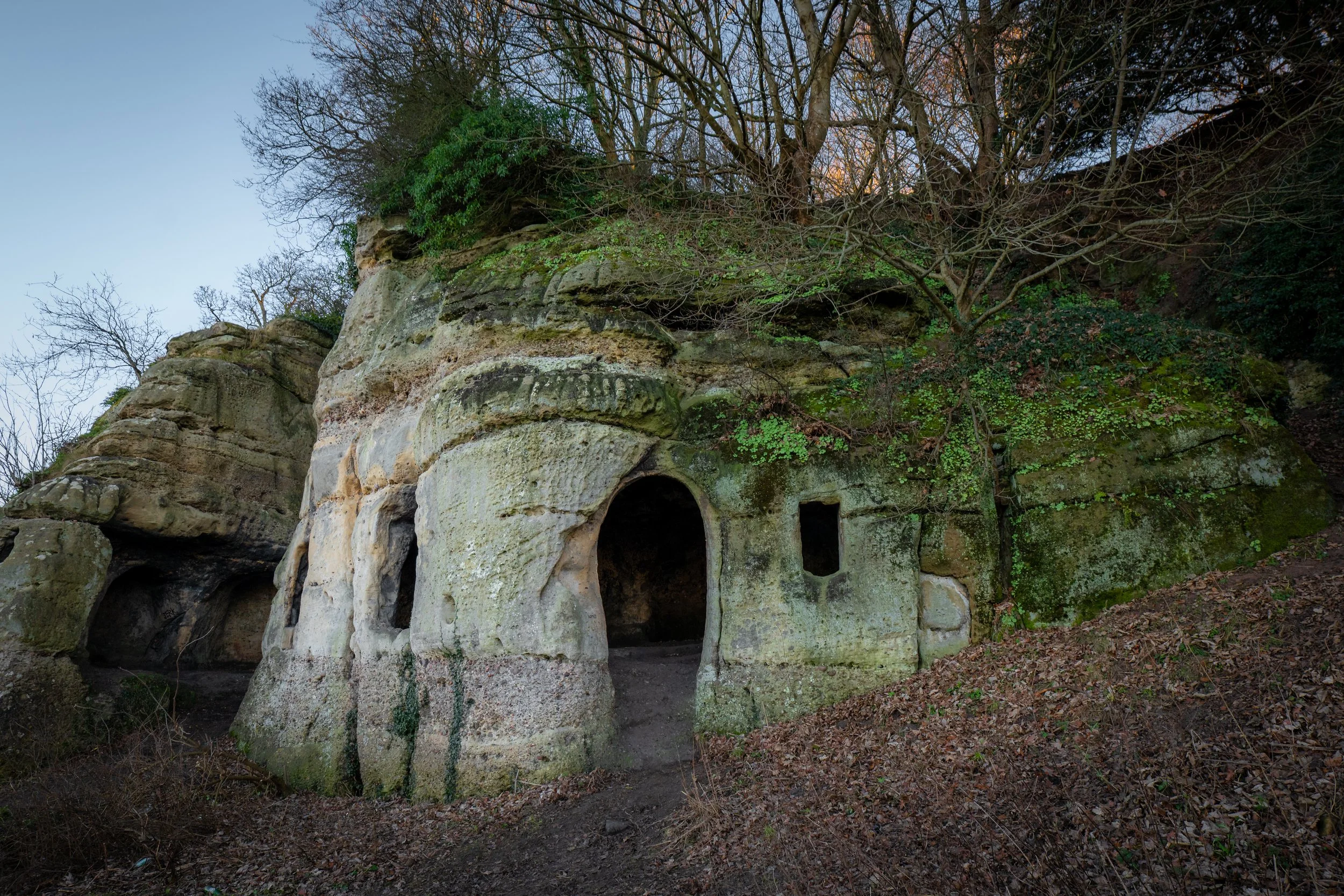
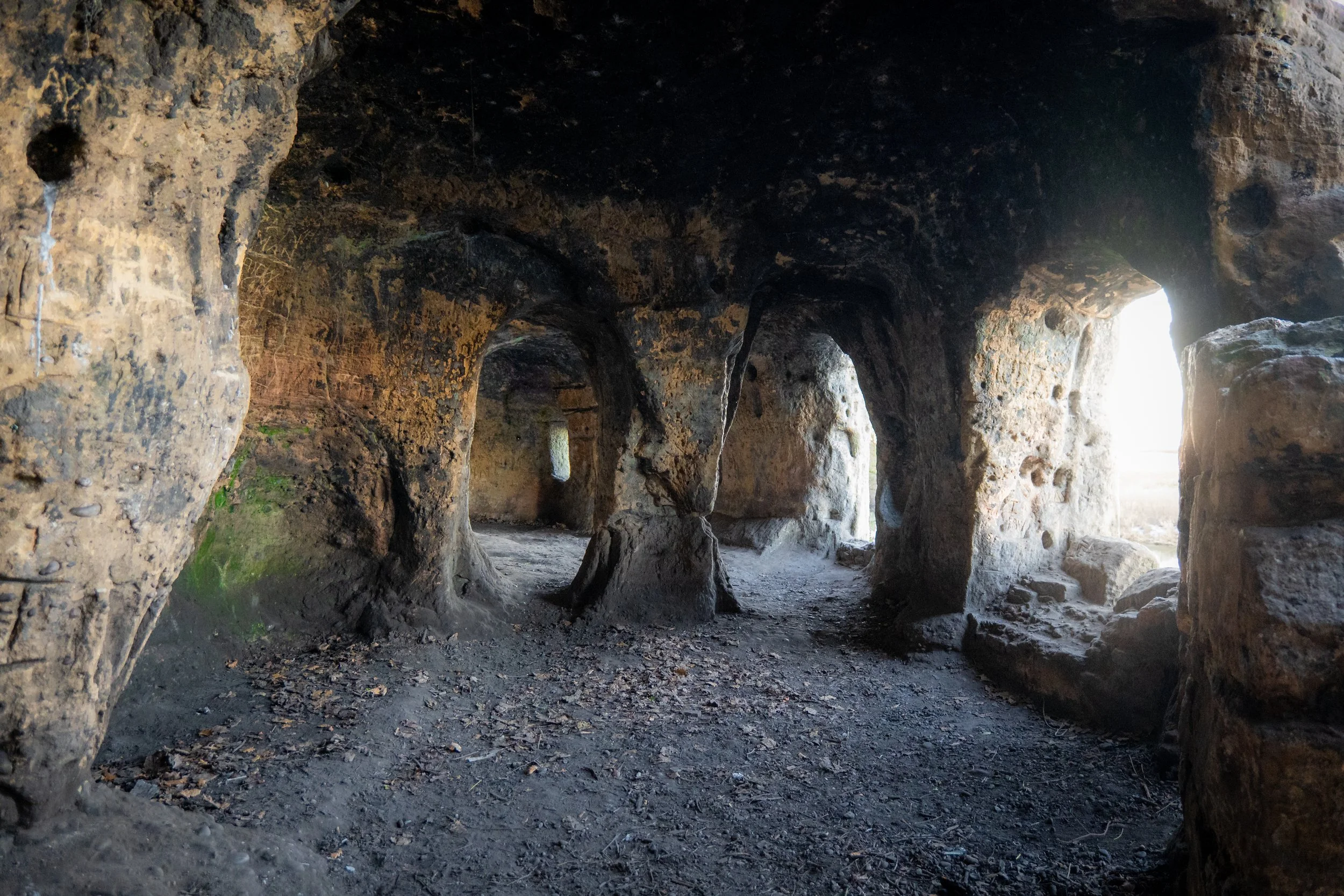
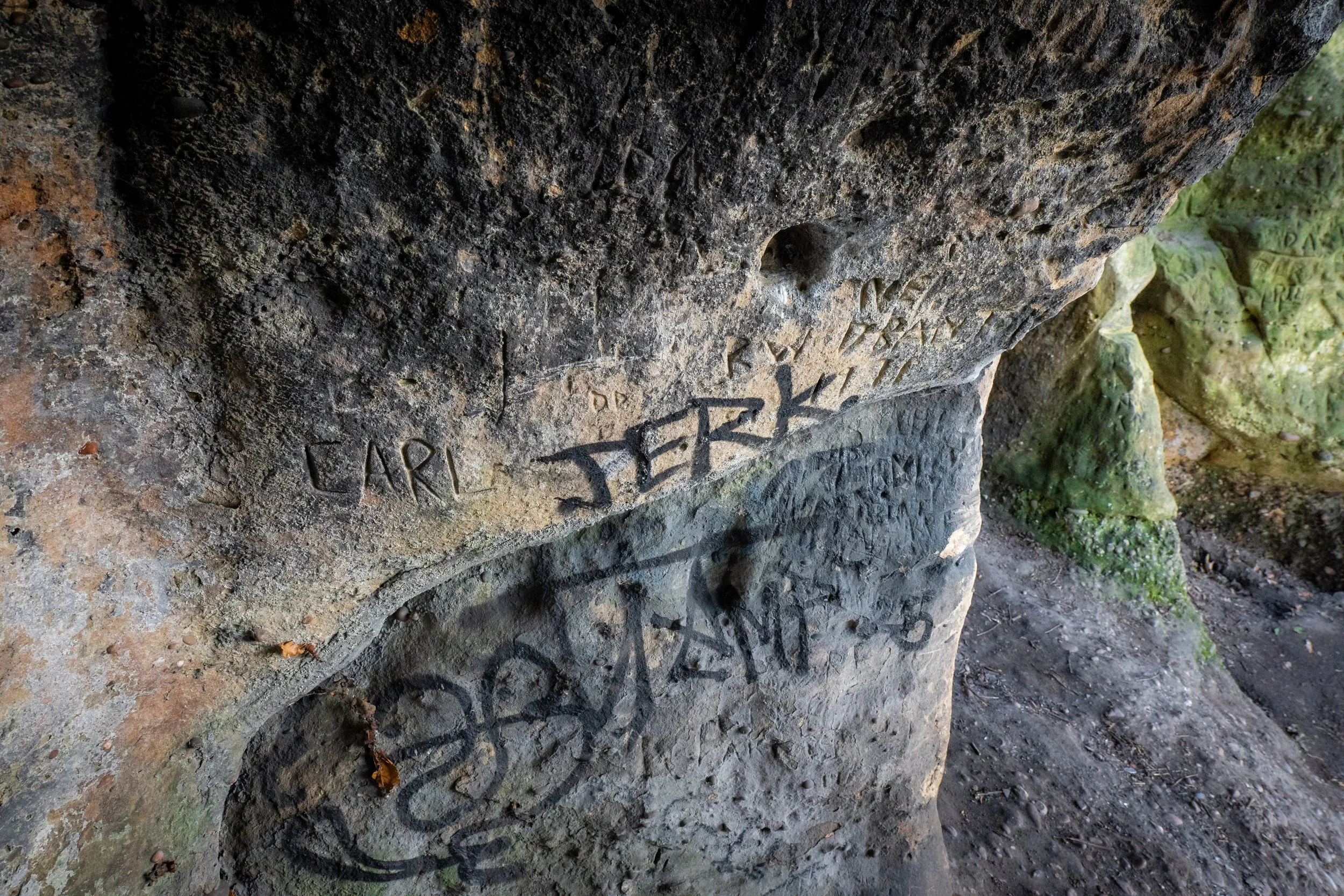
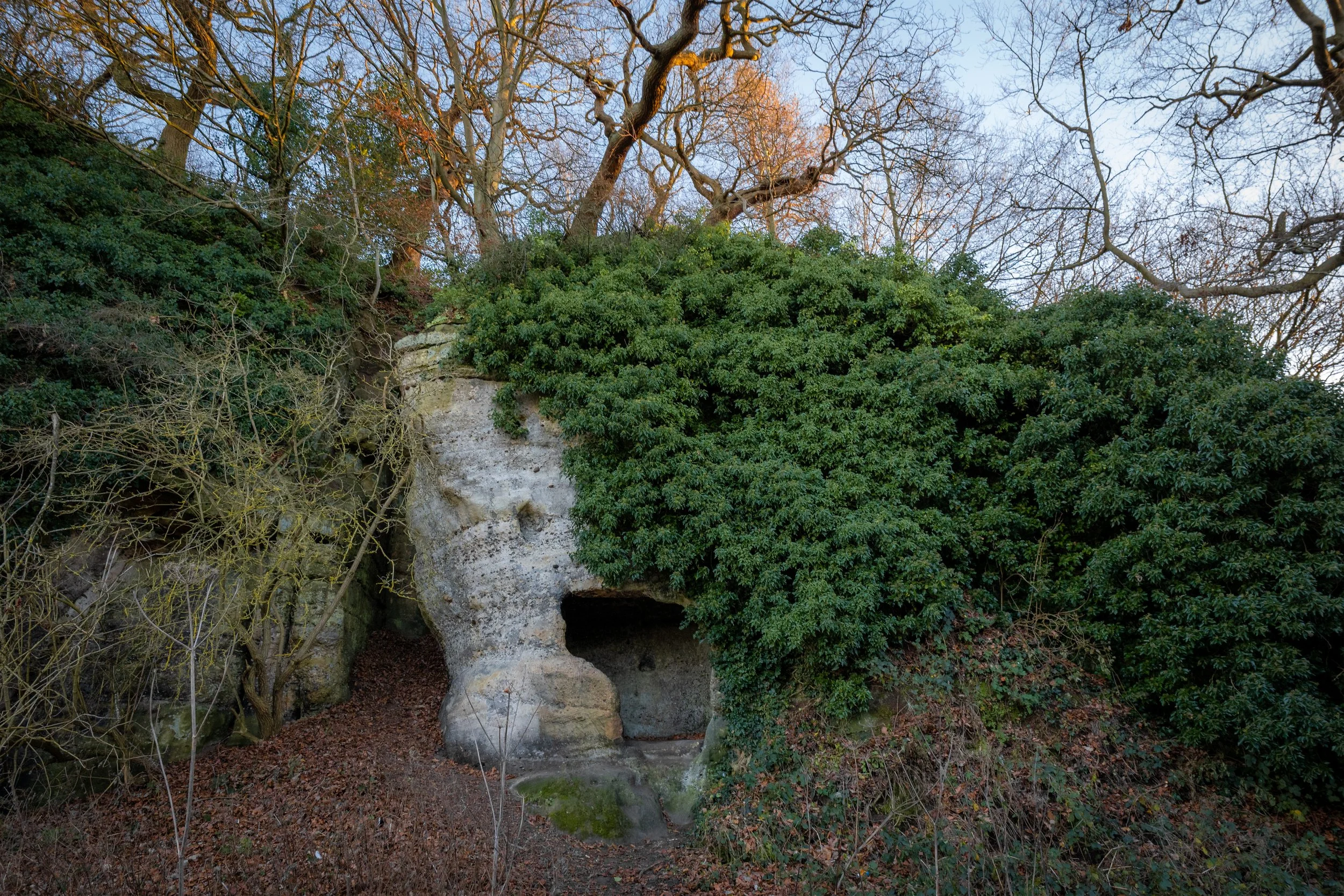
After a steadying sausage cob in the glamorous environs of Derby Bus Station my second port of call was the Anchor Church Caves, which are a short walk from the hamlet of Ingleby on the south bank of the River Trent. This structure dates from the early ninth century, and was hewn into a rock outcrop by King Eardwulf of Northumbria following his exile and reinvention as an anchorite known as St Hardulph. The site had an eighteenth-century afterlife, when – in a characteristic example of what I term ‘grotto-ification’ – it was enlarged and remodelled by local aristocrat Sir Robert Burdett as a rustic and romantic picnicking spot for visitors to nearby Foremarke Hall (which saw the brief addition of a front door). In order to obtain a wide composition with a watery foreground my original plan was to approach and photograph the caves from the north of the river, although this was ultimately thwarted by a frustrating succession of no entry signs, padlocked gates, and waterlogged footpaths; with the winter light failing, I snagged an Uber round to Ingleby and reached them via the more conventional route. The complex is much larger than Dale Abbey Hermitage, and the ambience noticeably more brooding and unsettling (although that could just have been a combination of their more imposing scale and the rapidly approaching twilight). They’ve become a palimpsest of inscriptions and graffiti, while a discarded and filthy mattress and hi vis jacket dressed the scene.
After returning home I sourced two vintage postcards of the hermitages on eBay and promptly ordered them as souvenirs; this is becoming an expensive follow-up ritual, but I consider my photos as postcards of sorts so it seems apt, essential even.